Testing Studded Snow Tyres
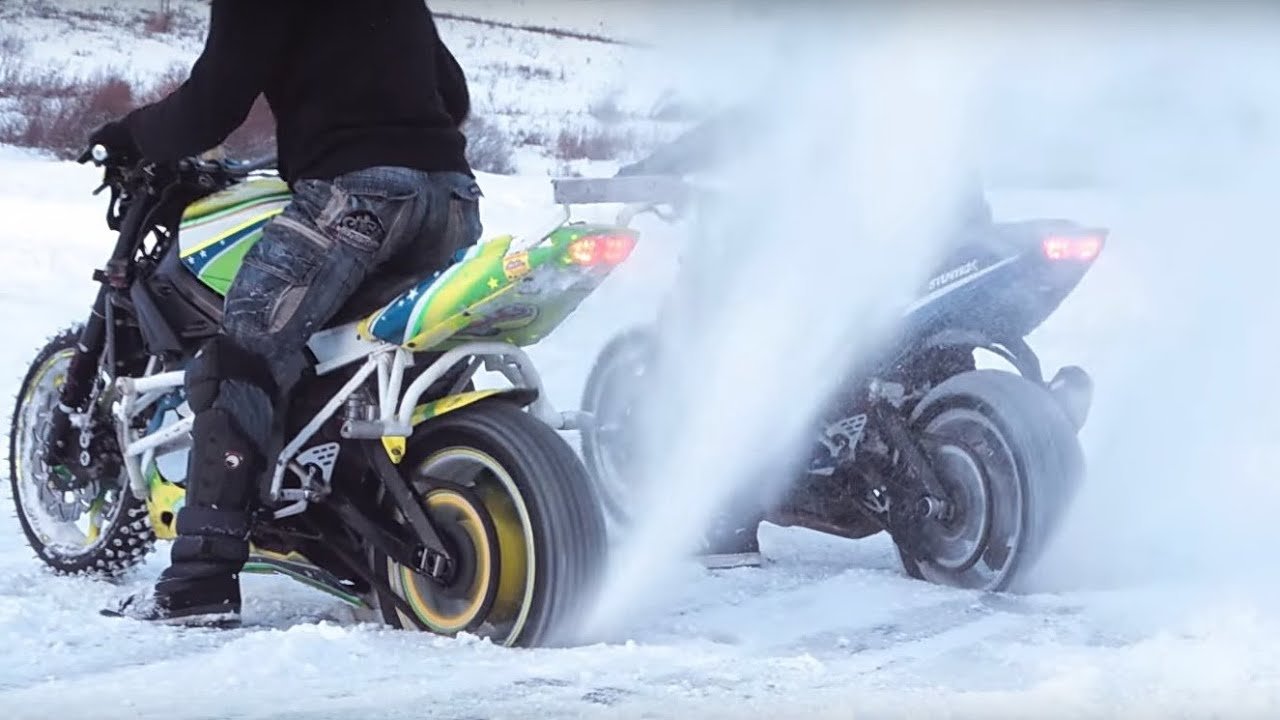
Motorcycle studded tires are great for riding a motorcycle in winter. We made two very different sets of wheels — you can find videos and articles about them on our website. There is contradictory information about both of them online, so we decided to test both sets under the same conditions. We went to a lake in the town of Vidnoe near the entertainment center "Tochka", where a motocross track is cleared on the ice. We were unlucky with the weather and got caught in a snowfall, but that made the test more objective. Below you can read about the pros and cons of both types of studded tires, which seemed obvious.
Studded tires I
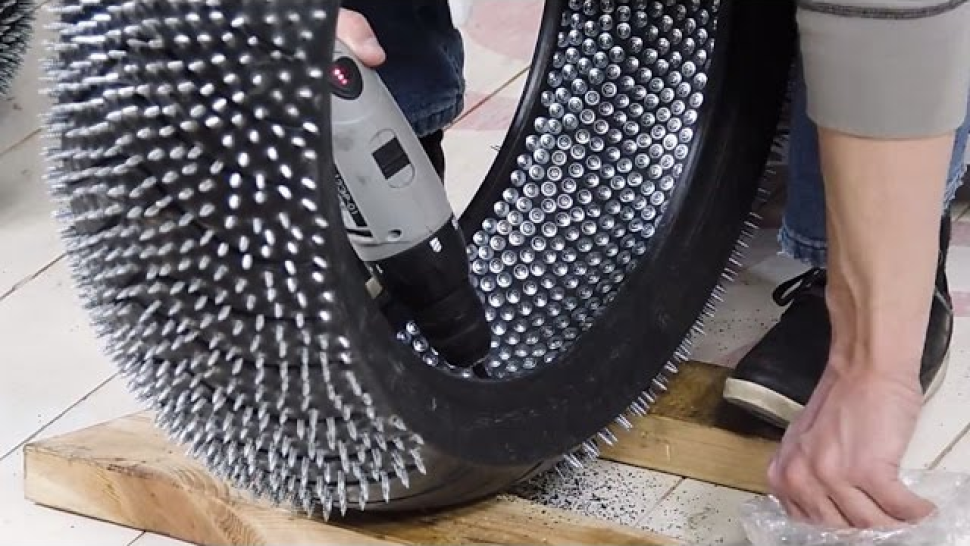
Studded tires I are the ones with many short screws. Many worry that the screws can fly out since they are screwed in without fixation. We did not lose a single screw though we made a dozen burnouts and revved the engine. But when transporting the bike you should be careful. The first time we transported a motorcycle on a trailer with a wheel chock for the front wheel. When the motorcycle was pulled to the chock, a pair of screws got pressed into the tire, so we had to disassemble the wheel.
Pros
- The wheel on such studs rides smoother in a straight line and when leaning. There is much less wheel wobble.
- The traction on clear ice is better. It is easier to do a wheelie.
Cons
- The wheels are instantly clogged with snow if the track is not cleaned. At the end of the video you can see that with sparse studs the motorcycle drove up the hill without any problems, and with dense studs it slipped right away.
Conclusion: such studded tires are better on prepared cleaned ice, but they aren't practical and will not work in bad weather.
Studded tires II
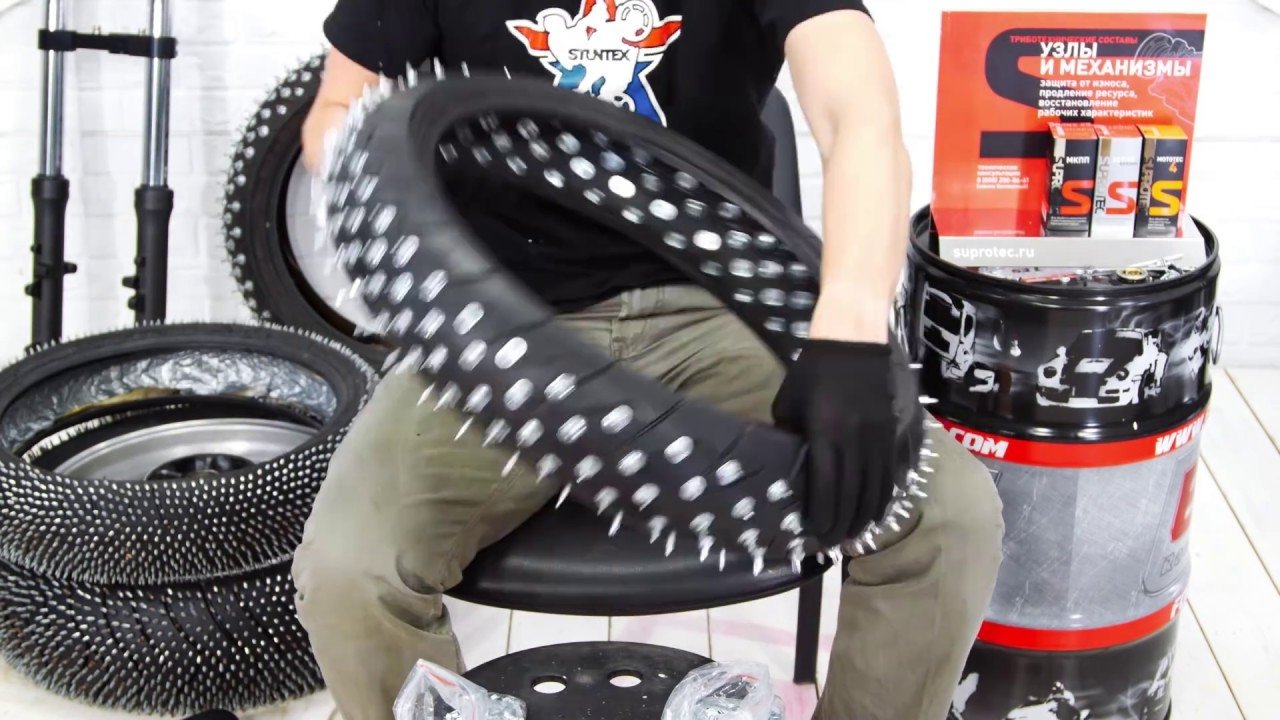
Studded tires II are tires with sparse roofing screws secured with nuts. Roofing self-tapping screws are good because you do not need to drill holes for them, they already have a drill on the tip. Also, roofing self-tapping screws are made of durable metal. Despite the fact that the screw is cut into the nut, and not screwed on, the nut can fly off. After each ride, one or two nuts were missing on the rear wheel. So such tires should be inspected and repaired when needed.
Pros
- Wheels with such studs work on any roads and are not clogged with snow, so you can ride in deep snow.
- Such tires allow you to drive at high speeds more confidently.
Cons
- There is some wobbling of the wheel when driving on level ice road.
- It is more difficult to do a wheelie because the wheel traction is much worse.
Conclusion: these are universal studded tires, which are good for any conditions or for any track. It is better not to stud the middle of the tire at all (studding just the sides is enough), so that the bike will be more stable on the level road.
We hope our experience will be useful to those who decided to ride a sport bike in winter. We decided that we would use studded tires I for shooting and in suitable weather, and studded tires II for rides, since they need no preparation.