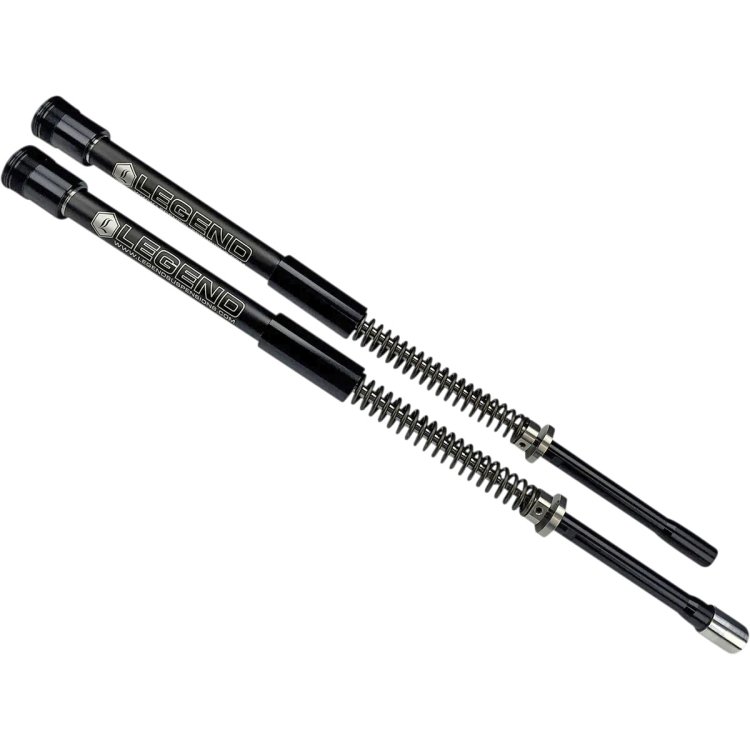
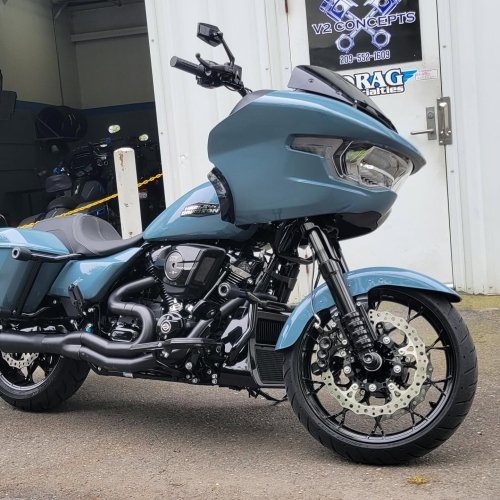
Street Glide Arlen Ness Fork
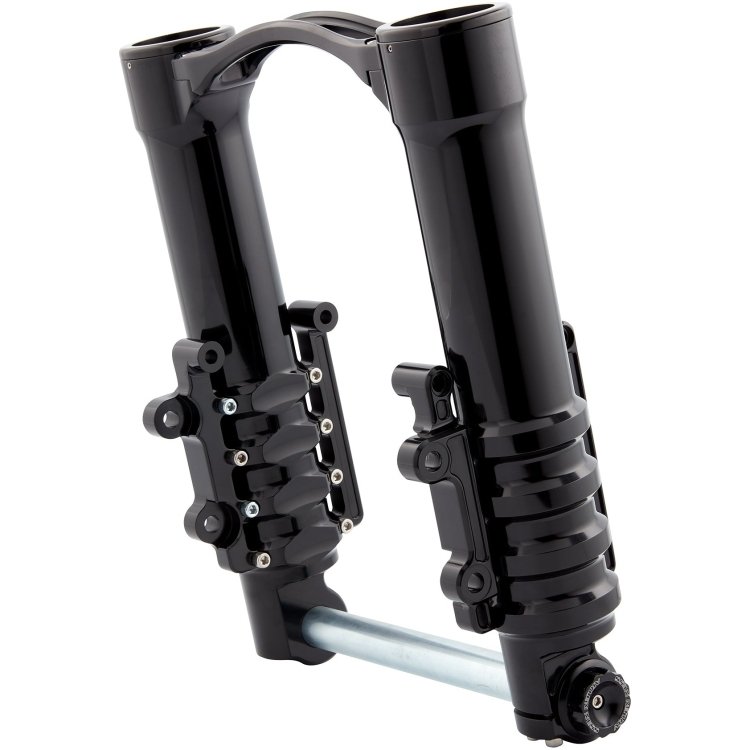
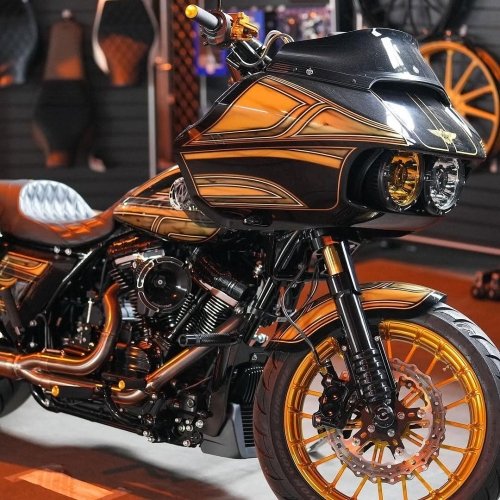
The Arlen Ness METHOD “NO FLEX” kit consists of fork lower legs for Harley-Davidson Touring models, supplied with an axle, an additional fork brace, and mounting brackets for different brake calipers and brake rotors.
“NO FLEX” means the METHOD system connects both fork legs with an additional triple clamp at the top and the wheel axle at the bottom. This ensures high structural rigidity, so both fork legs operate as a single, integrated system. This lack of fork flex improves overall suspension performance, evenly distributes the load across both forks, and prevents the fork tube from bending relative to the lower leg, which is especially important on heavy motorcycles.
The METHOD “NO FLEX” is a design solution that increases front-end rigidity, making the motorcycle more stable during steering, cruising and braking, and also ensures more efficient performance of the front suspension on bad roads and under extreme steering.
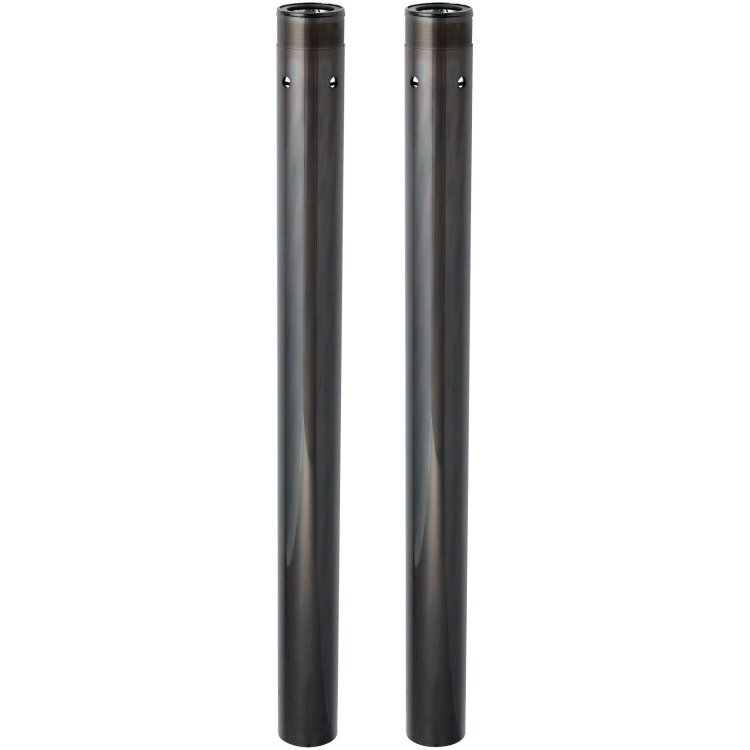
For maximum performance, Arlen Ness also offers fork tubes with low-friction, wear-resistant coatings—black DLC or gold TiN—as well as oversized brake rotors, six-piston axial calipers, and four-piston radial calipers.
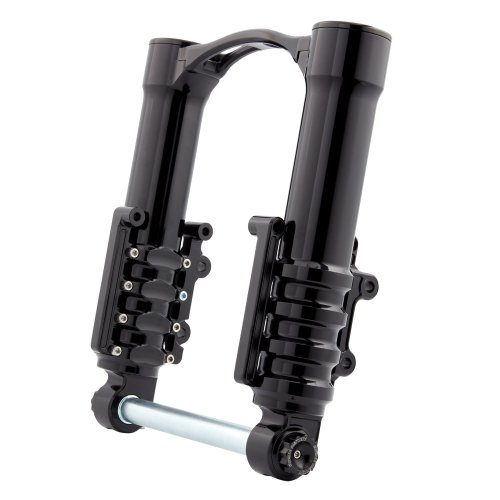
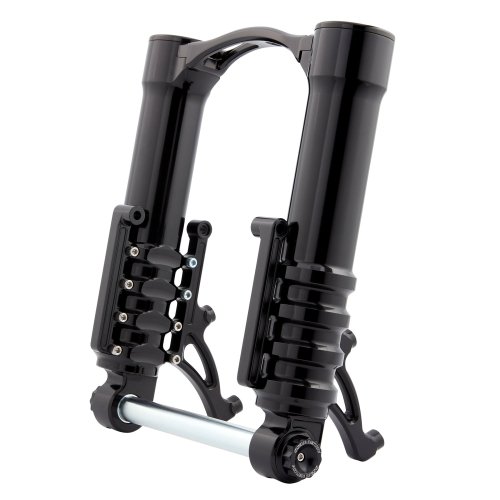
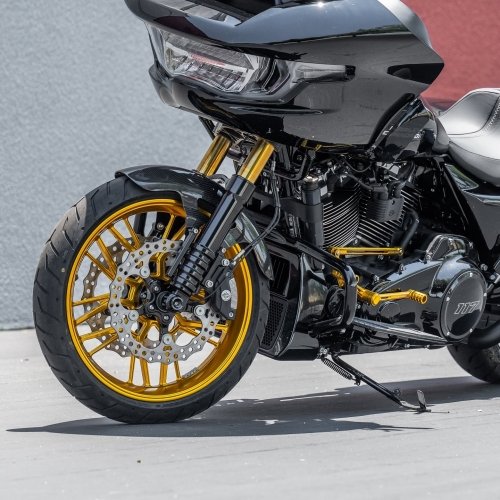
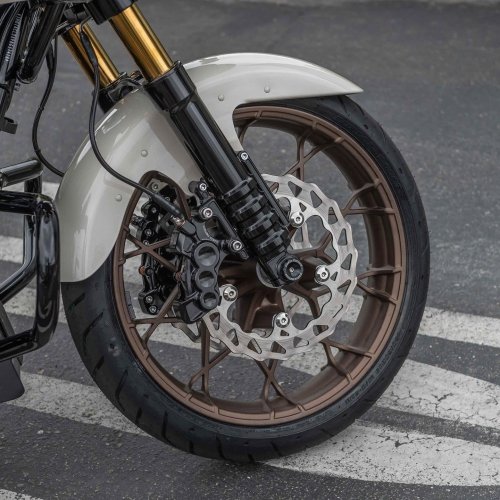
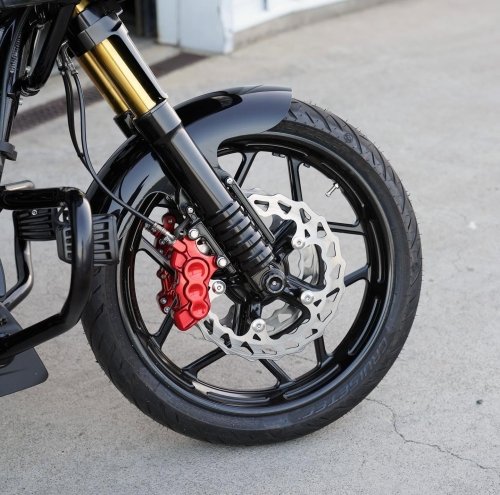
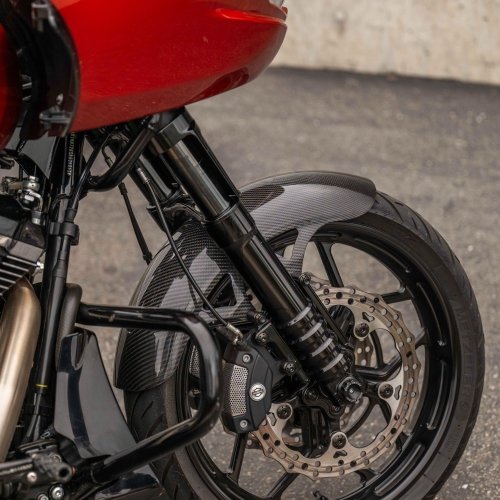
When assembling the fork from scratch, there is one important detail to keep in mind: the centering cups located at the bottom of the fork lower legs are not included with the Arlen Ness METHOD “NO FLEX” kit.
These cups delayed the project by six months while we waited for them to arrive from Europe. We decided not to disassemble the stock fork just to remove the cups, since a complete original fork is easier to sell on the used market than its individual components.
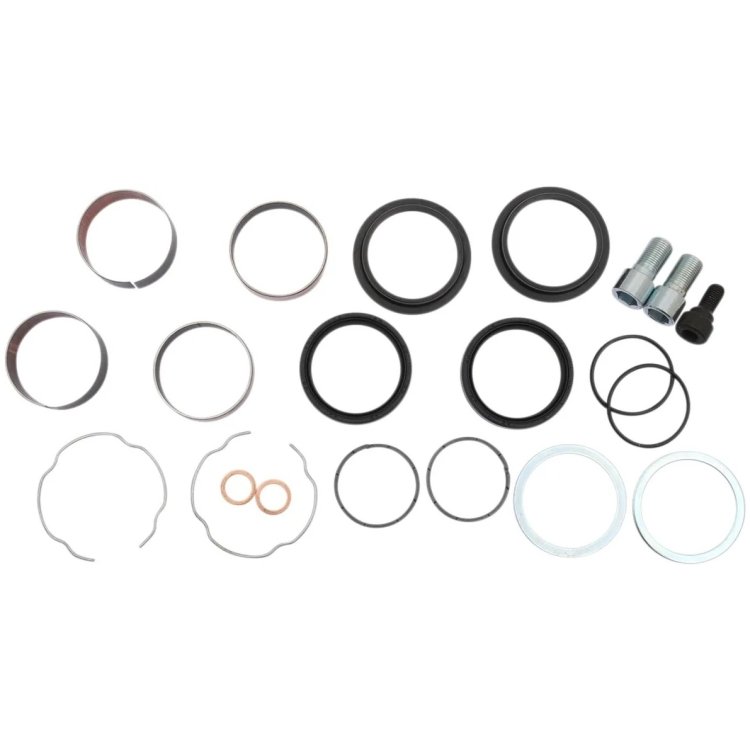
A complete fork rebuild kit is also required when assembling the fork from scratch. We used a Drag Specialties kit containing all the necessary parts.
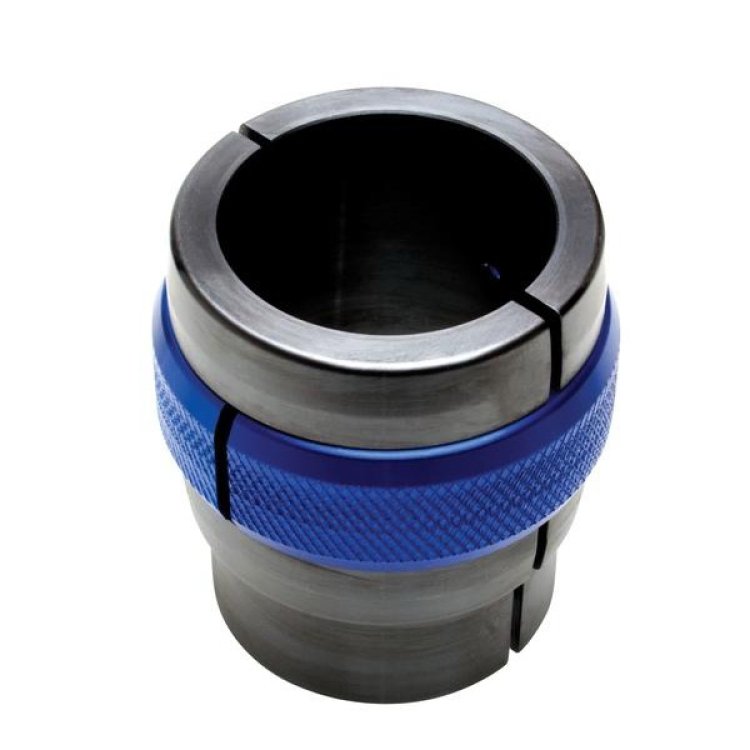
Assembling the fork with cartridges is not particularly difficult. The only special tool required is a fork seal driver.
Interestingly, according to the Harley-Davidson service manual, the guide bushing, washer, and oil seal are driven into place together. On many other motorcycles, the bushing is installed first and the seal is driven in afterward. We followed the Harley-Davidson manual and installed all three parts together—it worked perfectly.
To see detailed comments explaining each stage of the assembly process, turn on subtitles in your preferred language. This video may be useful for those who are rebuilding a stock fork.
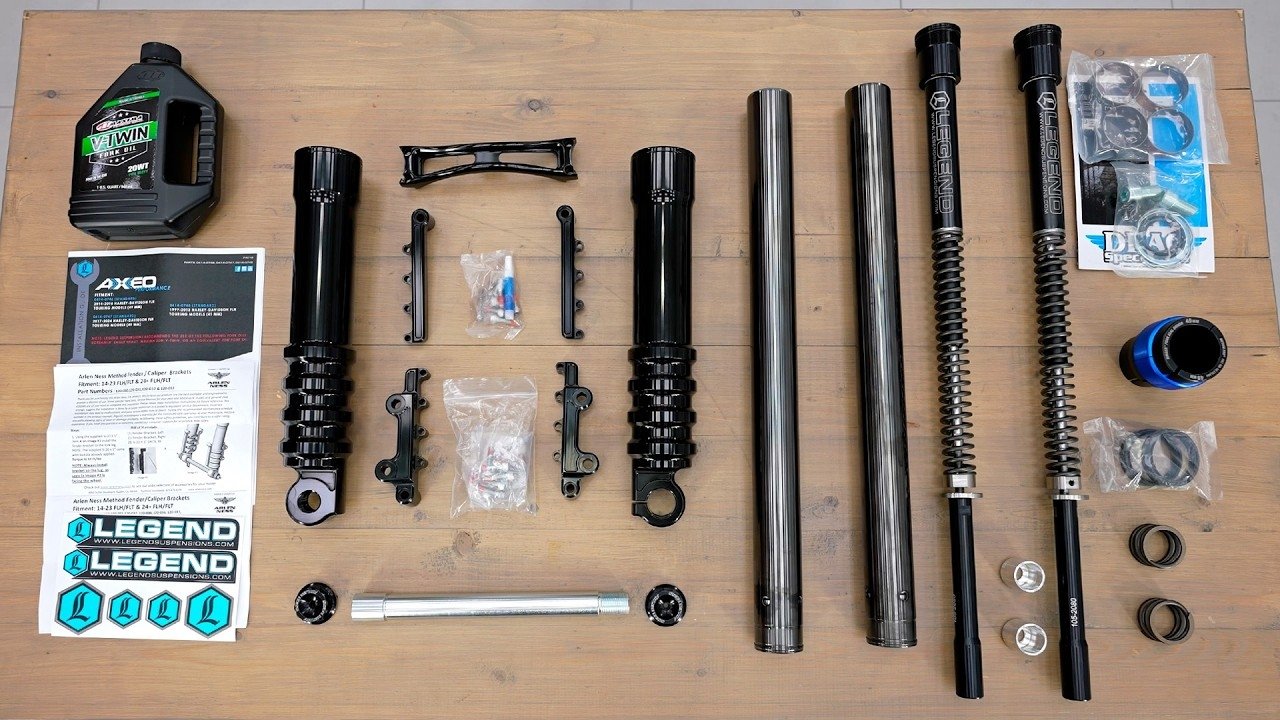
- 00:03 Overview of all components of the new fork.
- 01:02 Arlen Ness fork assembly.
- 01:31 Installation of oil seals and guide bushings.
- 02:38 Installation of Legend Axeo cartridges.
- 02:48 Setting the spring preload.
- 03:52 Filling the fork with oil.
- 05:02 Installation of the brake caliper brackets.
Arlen Ness products generally offer an excellent balance of design, quality, reliability, and performance at a reasonable price. However, on the METHOD “NO FLEX” fork lower legs, appearance was given priority over practicality: the conventional rubber dust seals were replaced with decorative aluminum rings. Although the rings fit fairly closely around the fork tubes, more dirt will reach the oil seals than it would with conventional rubber dust seals.
Our magazine also features detailed articles and videos about Legend fork cartridges, including descriptions and comparisons. Overall, they remain one of the highest-energy-capacity suspension solutions fully adapted to the stock fork and the weight and demands of Harley-Davidson motorcycles.
A separate discussion about this fork is available on our forum.