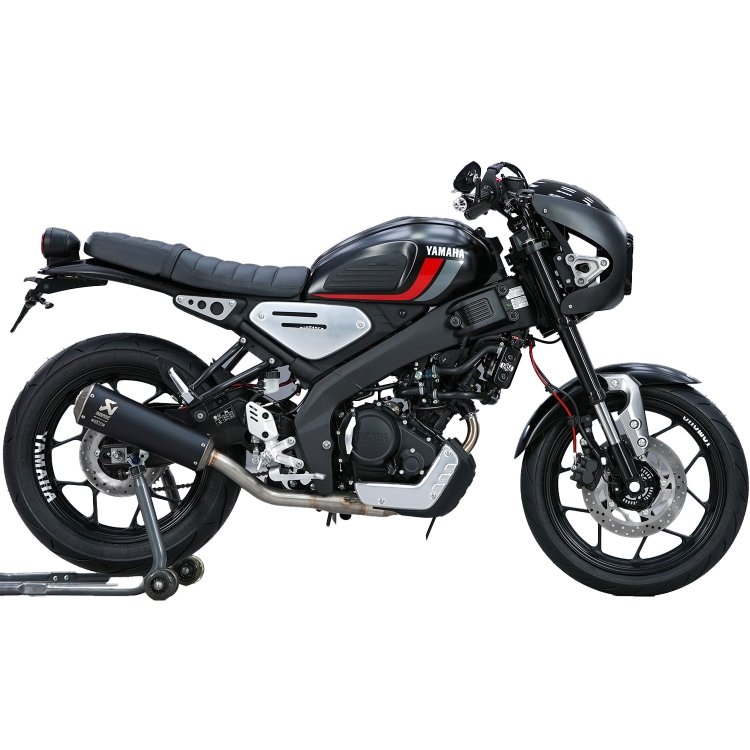
Brightest Headlight on XSR125
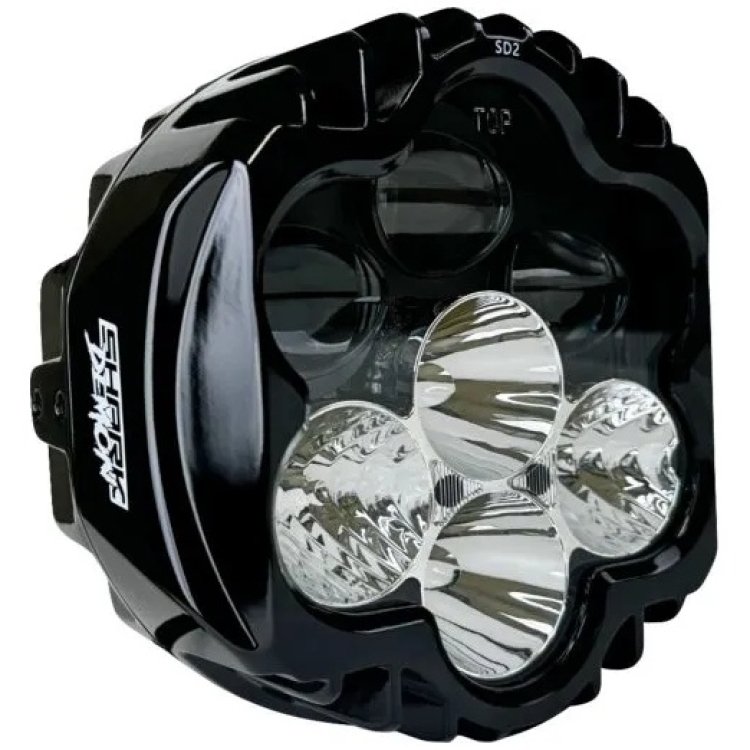
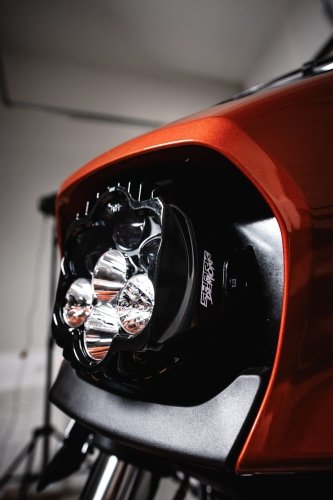
The SharkDemon2 is the brightest LED motorcycle headlight from manufacturer Custom Dynamics. These headlights are designed for Harley-Davidson motorcycles, but can be installed on any bike. We decided to install one on our XSR125, for which we used a SharkDemon2 kit from Street Glide 2024 with a ready-to-mount bracket.


MOUNTING
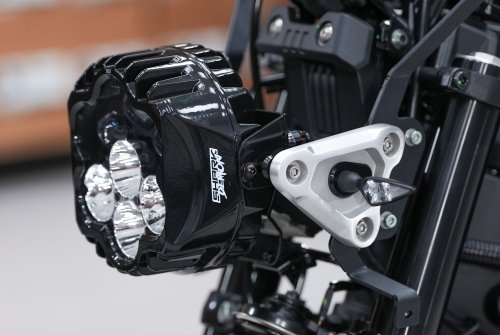
The Street Glide mount is practically universal. It fits many classic motorcycle headlight mounting configurations. We simply cut off the protruding side pieces and removed the rear aluminum cover plate — that's all we had to do.



WIRING
The logic of low and high beams operation varies on different motorcycles. But any headlight can be connected to any motorcycle; the only question is the number of control relays: one, two, or no relays, as long as the logic matches.
On the Yamaha XSR125, the logic is the following:
- Plus (brown) is common for both low and high beams, powered when the ignition is on.
- Low-beam minus (yellow-black) goes to ground when the engine is running.
- High-beam minus (yellow) goes to ground when the ignition is on and the high-beam switch is activated — so the high beam can work with the engine off.
- For the high-beam indicator on the instrument cluster there is a separate wire (yellow-red).
- The parking light comes on with the ignition from the brown plus wire.
The logic for the Custom Dynamics SharkDemon2 headlight is:
- Minus (black) is common for low and high beams.
- High-beam plus (white) is a separate wire.
- Low-beam plus (red) is a separate wire.
So it turns out that the operation logic on the XSR125 and the Custom Dynamics SharkDemon2 is the opposite.
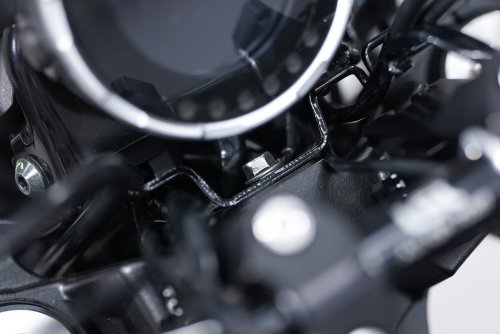
To connect the Custom Dynamics SharkDemon2 to the Yamaha XSR125, two control relays are needed — one for the low beam and one for the high beam. There is no parking light on the SharkDemon2. We chose not to implement a parking light, because with the engine running the low beam stays on constantly and performs the parking light function. Also, you need a separate common ground — we took ground from the bolt that attaches the dashboard bracket to the upper triple clamp.
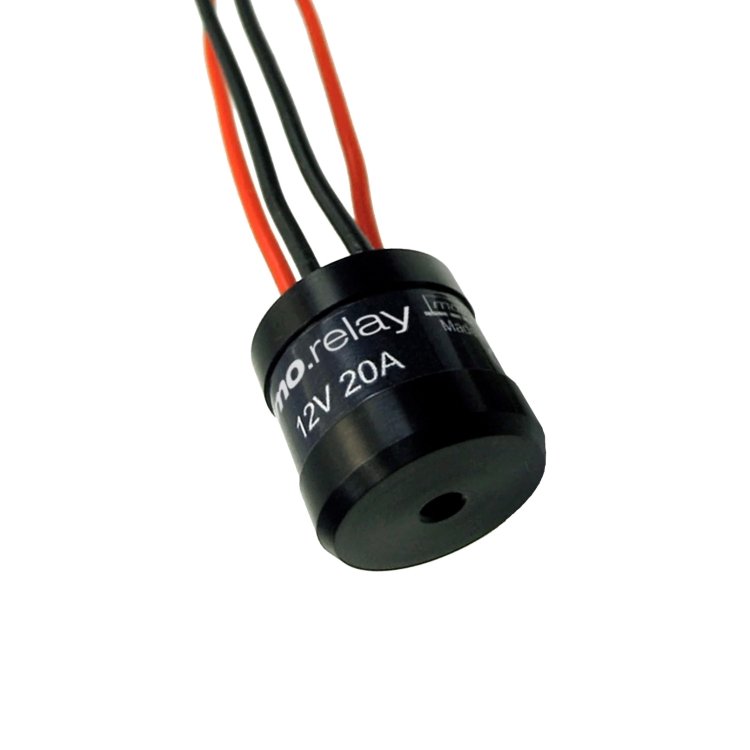
We used an excellent control relay – the digital relay MO.Relay Standard by Motogadget. The advantage of this relay is that it is super reliable, so it can be wired into the harness permanently without a connector. It has short-circuit protection, is vibration-resistant, waterproof, and blocks idle currents when devices are turned off.
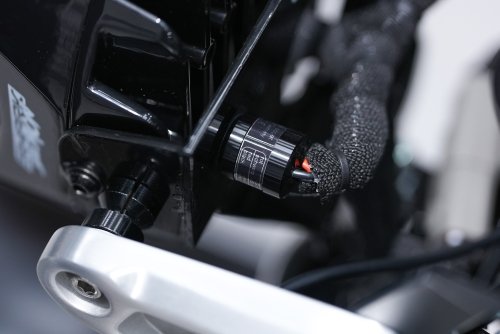
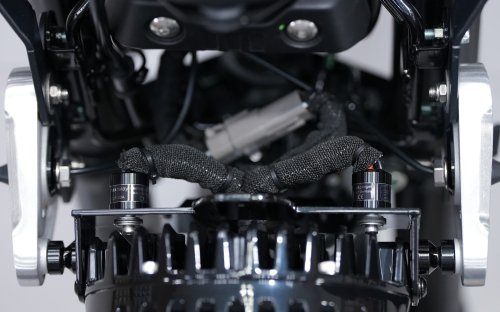
We placed both relays on the headlight bracket. It turned out compact and neat, as if the bracket were made specifically for this configuration.

POWER
When connecting LED optics, usually you don’t have to worry about power consumption because it is lower than stock bulbs. But our situation is unique: we are putting the brightest LED headlight in the world on a small 125cc motorcycle!
On the XSR125 the fuse for all lighting is 7.5 A, which supports a maximum power of 90 W at 12 V, so actual working power should be lower. With the engine running, system voltage is about 14.5 V so the working power may be a bit higher (max 108 W).
Because there is no hazard flasher (all turn signals blinking at once) on XSR125, the highest power will occur when one side’s turn signals, brake light, low and high beams are all on.
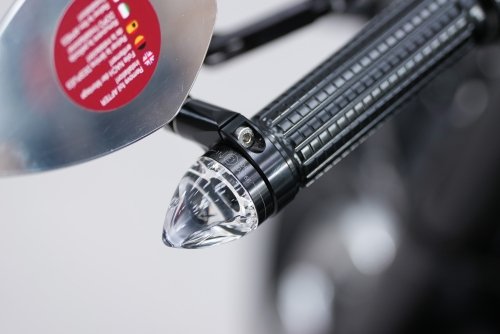
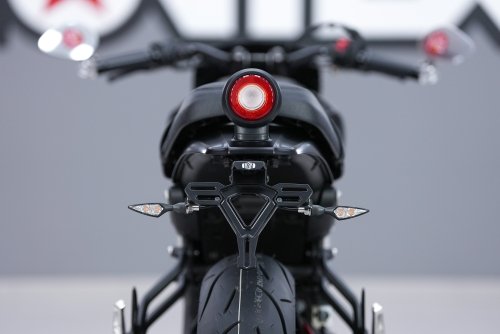
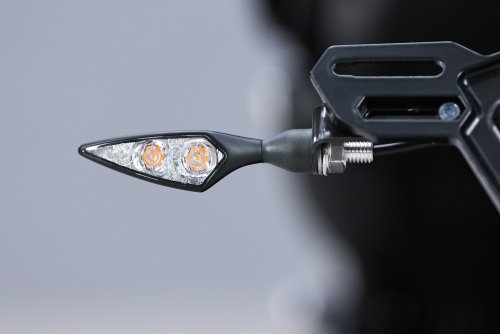
We already replaced the turn signals with LED ones and now we have:
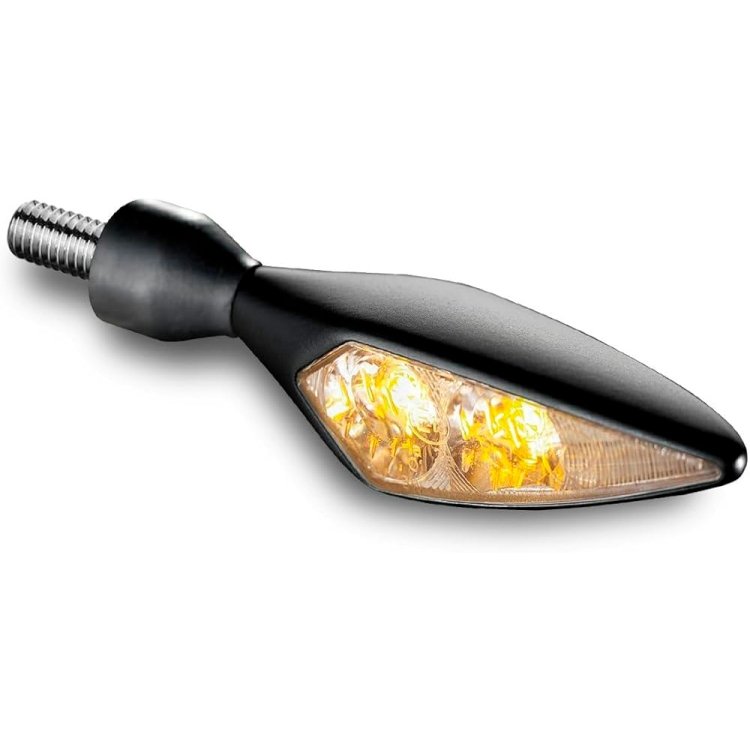
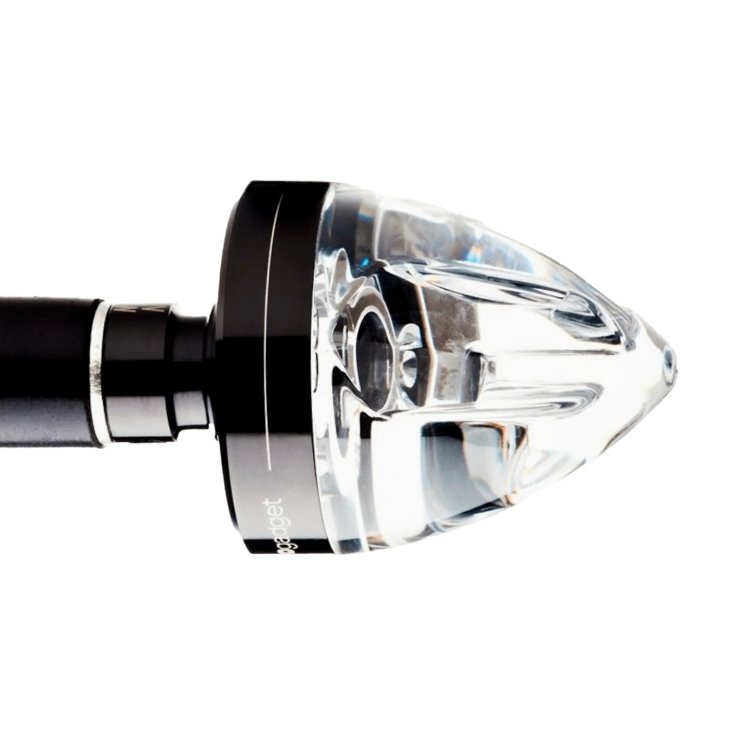
- mo.blaze cone LED turn signal – max 7 W (one piece on one side)
- Rhombus LED brake/tail lights – max 3 W (two pieces on one side)
- SharkDemon2 headlight: low beam – max 29 W, high beam – max 49 W.
- LED brake light – no more than 3 W.
So the total maximum power when all optical consumers are on does not exceed 94 W. It’s important to understand that this maximum nominal power is what manufacturers state — real operating power is lower. Since the maximum total power we calculated is close to the fuse limit, we tested the system. When all devices were on (this cannot happen in real life), the fuse did not blow even after prolonged operation.
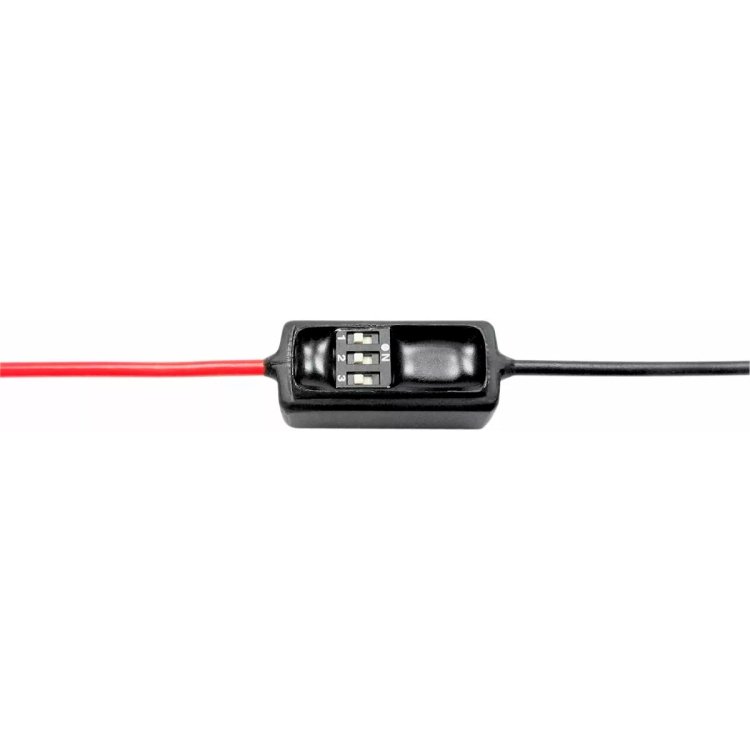
To make the turn signals flash at the correct rate, we used the Motogadget mo.stop digital flasher relay.
The visual demo in the video shows the installation and a night brightness test. At the end you can also see how the turn signals operate at night.
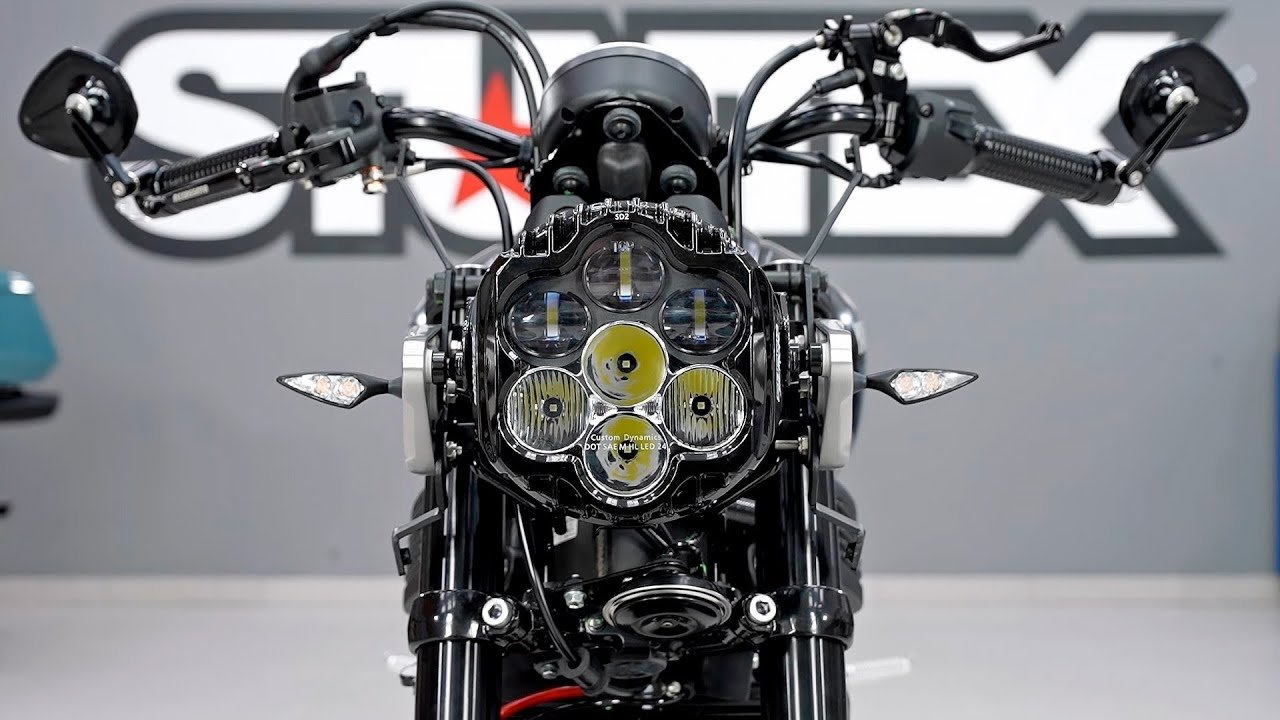
In the end, the new super-bright lighting largely defined the name of the project “Dominator”. The brightness of the turn signals and headlight on our bike is greater than the stock lighting on any other motorcycle, regardless of price or engine size. In traffic or in a parking lot, the Dominator outshines them all.