XSR900 Adjustable Handlebar
We continue working on the project XSR900! It is necessary to change the handlebar setup to match the LSL 2-slide footpegs, which we set slightly rearward for a more forward-leaning riding position. We want a more comfortable ride at 120–160 km/h. The easiest way is to use adjustable clip-ons, but they will radically change the neo-retro look that we want to keep. With clip-ons, the bike will look more like a Cafe Racer, but what we want is a city motorcycle, better adapted for high-speed riding than the standard one.
A handlebar is not the most practical solution for experiments with positioning, because there are no operational adjustments. The basic principles when choosing a handlebar are simple, but it is difficult to accurately predict the geometry:
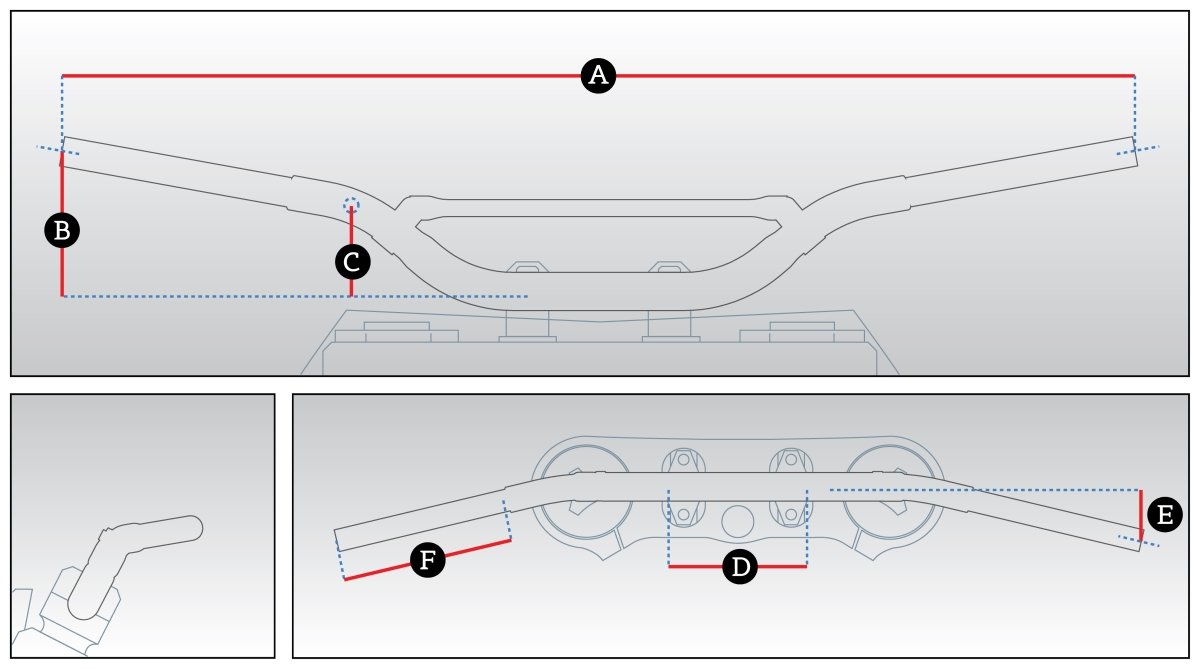
- The wider the handlebar "A", the easier it is to turn. On off-road motorcycles, the handlebars are wide so that it is easy to steer, but at a speed of more than 100 km/h it is hard to hold on to such a handlebar, because the arms are wide apart and the rider’s wind resistance is too high.
- The larger the pullback (bend back) "E", the closer the elbows are to the ribs, and the body is more streamlined (on sport bikes, the pullback of clip-ons is big). The smaller the pullback, the more the elbows stick out — this makes it easier to hold the handlebar (on an MX bike, the pullback is small).
- The greater the rise "B", the more upright is the riding position. On urban motorcycles, the riding position is upright, so the handlebar is higher than on sport bikes, where the lowest possible slope is important for better streamlining.
- The length of the handle (straight part at the edges of the handlebar) "F" depends on the number of controls on the handlebar. The shorter the handle length, the stronger the handlebar. On enduro motorcycles, the handle length is short, because there are no controls, and its strength is important. On road motorcycles, the handle length is longer, because you need to place the controls with the ignition buttons, turn signals, high beam, etc.
- The rise at the base of the grip section “C” (determines the handle angle) is a dependent quantity that is responsible for the wrist angle and, accordingly, raising the elbows and shoulders. It is selected for a specific handlebar geometry in such a way that the wrists do not twist or tense.
- The width of the center section "D", as a rule, is no less than the standard and fits any clamps and top yokes. The wider this part, the stronger the handlebar.
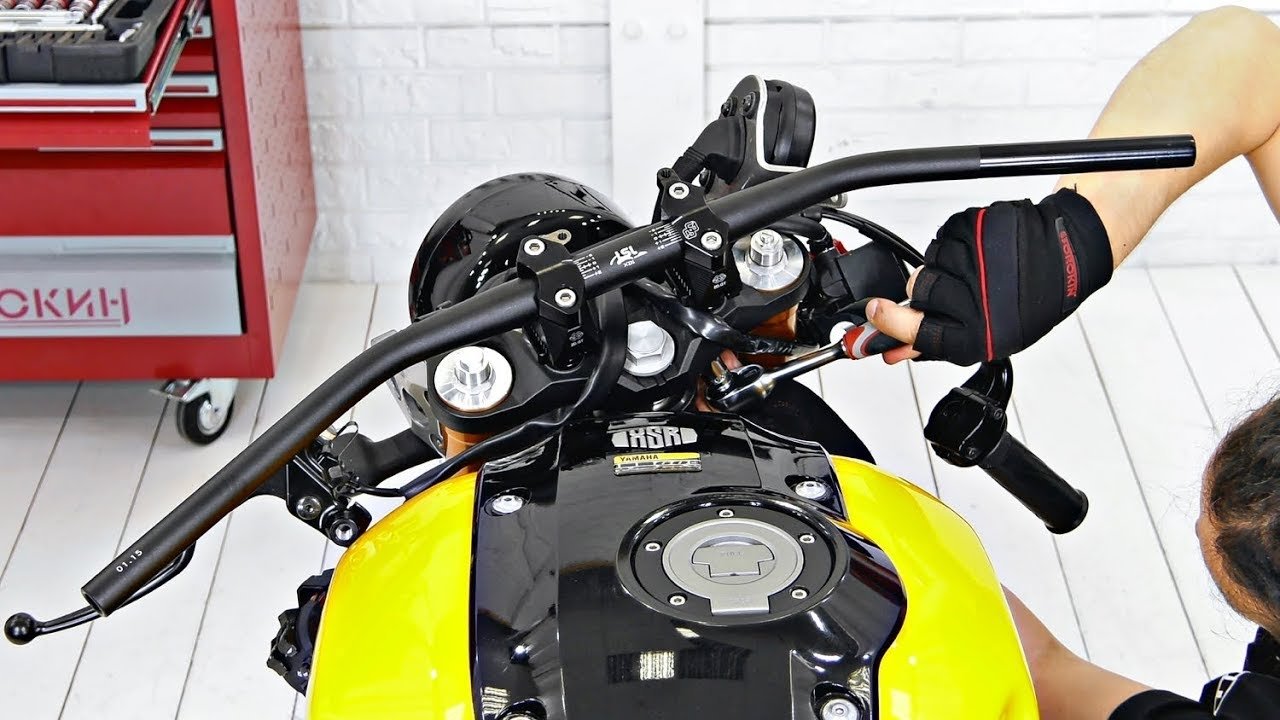
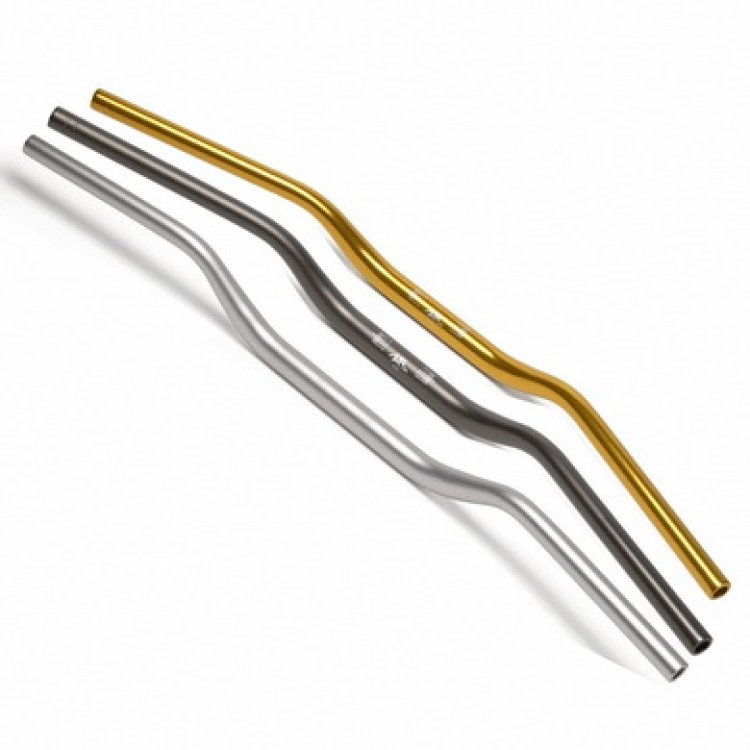
We chose an LSL handlebar. This is a famous German brand that adapts the geometry for modern road and urban motorcycles. This means that all the handlebars have a handle sufficient to accommodate the controls. The pullback, as a rule, is a little bigger than the standard, because in Germany it is possible to drive fast, which is also relevant for Russia. Different rises are available, for an upright or a more aggressive riding position, with a slight forward inclination.
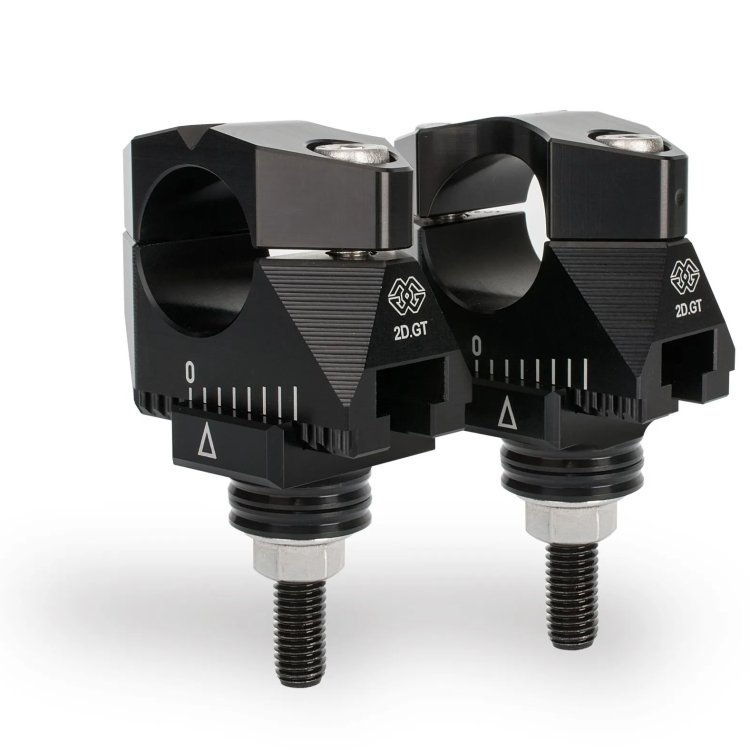
The geometry of the Drag Bar handles with zero rise fits XSR perfectly. In general, the zero rise is too low, but if the clamps are adjustable, then the rise can be set with their help. The unique feature of XSR900 is that the dashboard is mounted on the risers. Gilles Tooling makes adjustable risers for this model. The risers adjust in height and shift without removing the handlebar, which is very convenient.
When experimenting with the riding position, we recommend using adjustable components and quick-release solutions, because it is expensive and time consuming to change the handlebar and dismantle all controls every time you want to fix something.