Preparing a Yamaha R6 for Stunt Riding
The Yamaha R6 (03–05) is a fairly popular stunt bike, especially the 2005 model (two radiator fans, an upside-down fork, R1 brakes). Many pro riders prefer it to the Kawasaki 636. Top XDL rider Bill Dixon and world champion Humberto Ribeiro ride R6s. Attitudes toward this motorcycle have changed over time.
The motorcycle has a serious drawback: the stock subframe. It is so fragile that when it hits the asphalt it folds up along with the plastics and all the internals. So amateurs, let alone beginners, hardly used this motorcycle. But once leading brands came up with solutions (all-steel subframes, extra stiffening ribs), the motorcycle started gaining popularity. Now that you can buy a ready-made, tested subframe that is easy to install, more and more riders are switching to the R6. This motorcycle was prepared following the advice of American pro riders.
Cage
The most important thing. Of all the cages on the market, this one was recommended. This geometry keeps the motorcycle from flipping over in crashes and fully protects the muffler, footpegs and tail. What matters in a cage is not only geometry but also the right choice and treatment of materials. The mounting bolts must have a high strength class, and the tubes a certain thickness and degree of hardening.
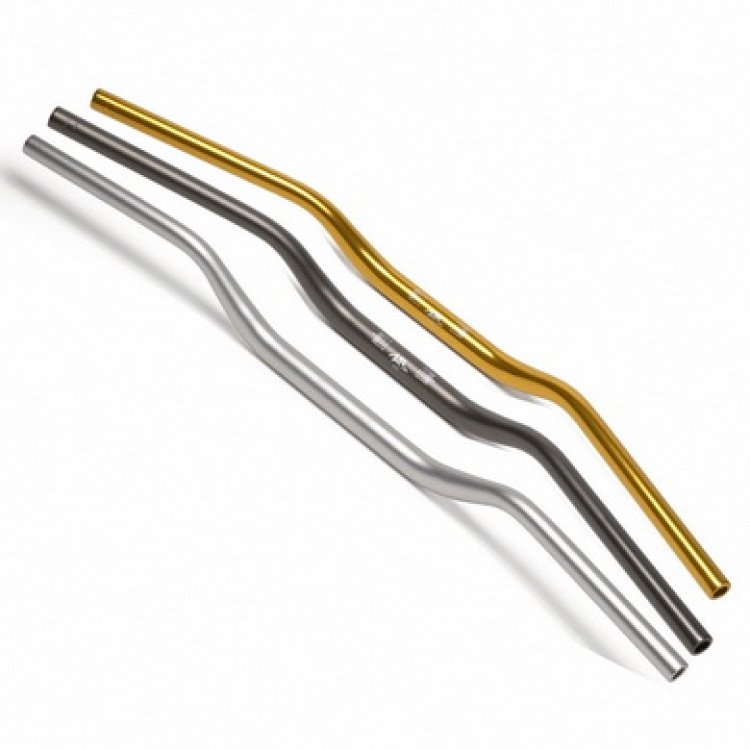
Motocross handlebar
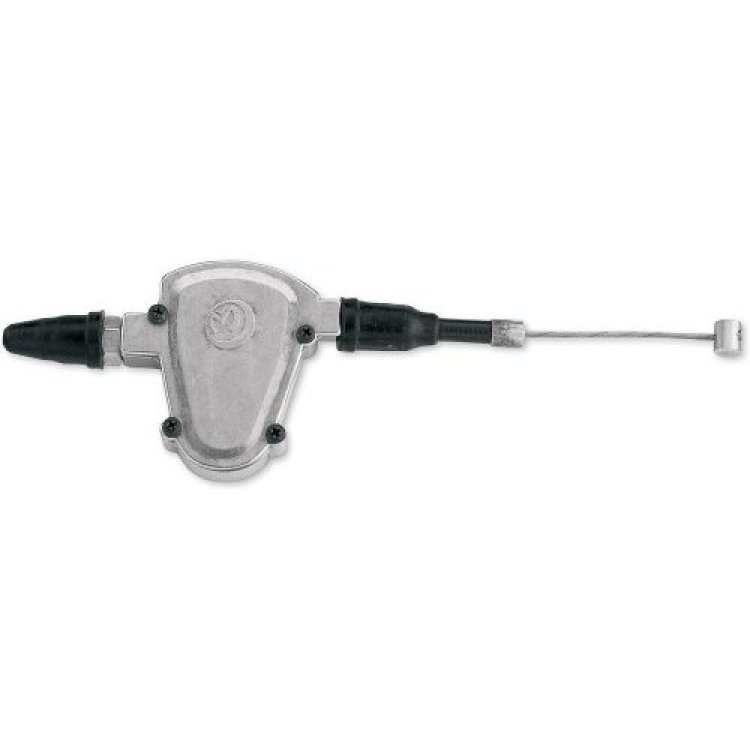
To fit a handlebar, it is advisable to replace the triple clamp with a stronger one. This triple clamp was machined at a factory from aircraft aluminum. The cables are just long enough; it is advisable to route the throttle cables through the front holes in the frame. A handy Moose part for an easy clutch pull is fitted to add 10–15 cm to the clutch cable length. Without it the cable is too short. The brake hoses are too short, so braided ones are needed. Don't fit a handlebar that is too high, and the pullback should be minimal, that is, the handlebar should be as straight as possible in all planes. Such a handlebar may not feel very comfortable when you sit on the motorcycle, but in a wheelie you will be much more comfortable. I recommend fastening the brake reservoirs with zip ties. In a crash the zip ties break, and the reservoirs dangle on their hoses. If you mount them rigidly, the plastic mount on the reservoir will break off in a crash: tested! For an easy clutch pull an RSC master cylinder is fitted. The ideal option, there's nothing better: comfortable and easy, plus strong and doesn't break in crashes.
Front end (lights)
It doesn't matter which. If you don't need a light, you don't need a headlight fairing either. If you ride to training on the bike, you do need the front end, of course. I recommend tucking all the wiring under the tank so there is nothing in the front end, as in the photo. This lets you wash the motorcycle without worry. This cyclops light shines quite well, more than enough. It's convenient to put the high beam on the right, as in the photo (a toggle switch), since that's where the left switch block connector is.
Dashboard
This model (2005) won't start without the dashboard. To avoid digging into the electrics, the dashboard was fastened with zip ties. And the oil and fuel indicators come in handy anyway. It turned out very neatly. The mount is flexible and strong enough. It's better to route the wires from under the tank: that's tidier. With this mount the dashboard is protected by the handlebar, and nothing will happen to it.

Handbrake: rear brake on the handlebar
The right switch block isn't needed, since there are no turn signals, and there's no one to honk at on the lot :) Removing it frees up space for the brake master cylinder. A special bracket is used to fit the second caliper. An independent brake system is assembled from the master cylinder, caliper and hose. The hose is routed under the tank. The hose must not be under tension. I recommend putting the caliper bolts on thread sealant: safety is the most important thing. The brake fluid reservoirs are fastened with zip ties, the best option: in a crash the zip tie breaks and doesn't rip off the reservoir mount. In general, zip ties are great. This bike has a HoHey system with a bracket for a four-piston caliper, an oversized brake disc and a 13 mm Magura master cylinder. Read more about the handbrake in a separate article.
Subcage
The only case where a subcage may come in handy is a sideways fall from a wheelie. The cage protects against everything else. OMR is a very popular subcage. In general, it's a useful thing, since the stock brackets are very fragile.
Subframe
The tastiest part of the motorcycle. This subframe was brought from America. It is a quality piece and, just as importantly, crash-tested. On the end is a flat bar. A flat bar is something between a round bar and a 12 o'clock bar. This device is probably used only on the R6 because of its chopped tail. It's hard to stop the motorcycle on it, but you can ride it, and that's easier than with a round bar. Since all the parts were made by one company, everything fitted perfectly!
60-tooth sprocket
I have now fitted a 60-tooth Supersprox Stealth sprocket with a 520 chain. There is no point using a chain thicker than 520. It's better not to fit a steel rear sprocket (heavy); aluminum is better, and ideally a light and durable Supersprox Stealth.

Muffler
Same as always: shorten it. I recommend using the most compact mufflers possible: for example, no cage will protect a very large-diameter stock muffler.

Steering stops
The steering stops on the lower triple clamp go at the first crash. The most effective and simple option is to insert spacers between the fork tube and the rubber clamps the front end mounts on. The spacer thickness should be such that there is a gap between the fork and the radiator at full lock.

Idle adjustment
It's convenient to route the idle adjustment out from under the tank. That way it's at hand. The tank won't pinch the cable, since there are stops that keep the tank from touching the frame.

Hole in the passenger seat
You need to make a hole in the passenger seat for your foot when doing standup wheelies. You can cut the hole with a heavy-duty paper knife. Cut it so the stiffening ribs remain, otherwise the seat may break. Don't make the hole small. The bigger the hole, the easier it will be to place your foot. Pay special attention to the seat mount. It's important that it doesn't wobble: I fitted an extra spring. Take the seat mount seriously; I realized this when it came off while I was riding and I fell!

Pegs on the wheel axles
Pegs on the front and rear wheel axles are an important element. First, they are protection. Pegs protect not only the wheels from damage but also the front brake discs. If a brake disc bends even slightly, the handlebar will shake in a stoppie. Second, pegs let you vary your burnouts. Just put your foot on the front peg and you have a new trick.
Dented tank
You can dent the tank like this: remove the tank, take out the pump, unscrew the cap, place the tank on a soft but stable support so that it rests on it with its whole bottom rather than a few points, then strike it many times with a rubber mallet, gradually denting the top of the tank. The work is painstaking, but if you take your time, it will gradually work out.

Tip-over sensor
The sensor is located in the tail and is marked "UP". The tip-over sensor contains a pendulum; it's enough to lock it in the horizontal position (the "UP" marking must be on top).
Oil starvation
Overfilling by half a liter of oil is enough. On the lot in training mode the light comes on after a minute and a half on the rear wheel. Don't let it worry you: the R6 has an oil level sensor, not an oil pressure sensor. When the light comes on, it means the level has dropped, but the pressure in the system remains.
Crankcase ventilation
The simplest and most effective way is to disconnect the crankcase ventilation hoses from the air filter and put them into a non-sealed container. Even if oil seeps out, it will go into the container, bypassing the air filter. Read more about modifying the crankcase ventilation in the garage section.