


SX Racer Cafe Racer Is Ready!
We have completed the SXRacer project on the Triumph Bonneville base. The motorcycle turned out better than the factory one — this is the main task that we set out to achieve during the design. In our opinion, the construction of such a custom is justified only if it turns out to improve the original. Motorcycle aesthetics are not a matter of taste and design; motorcycle aesthetics are a matter of manufacturability and functionality. There are no purely decorative accessories on the bike. Any detail or modification must have a functional or technological aspect.
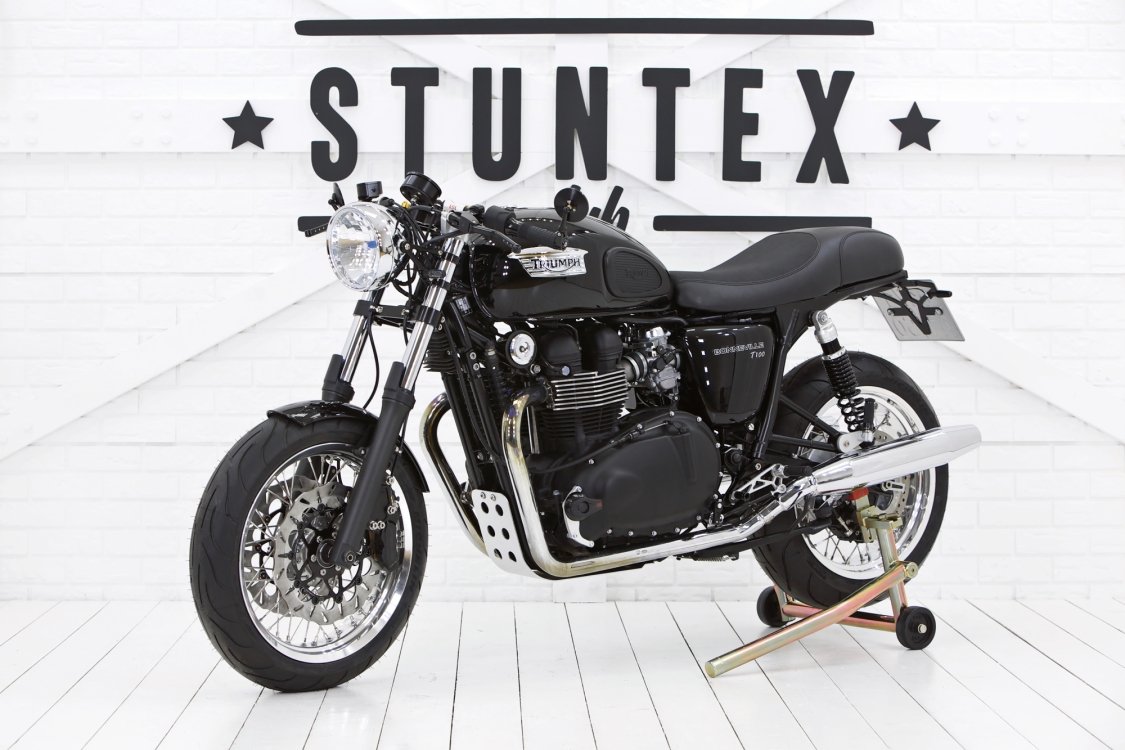

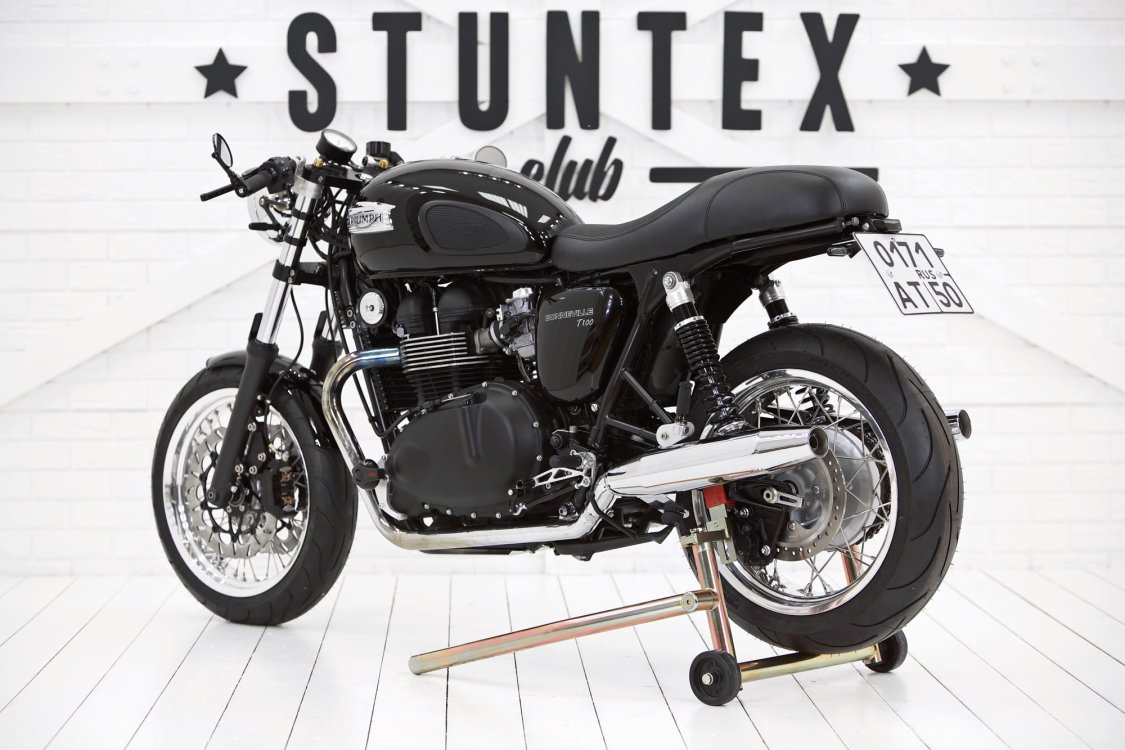
We built a Café racer based on the Triumph Bonneville T100: a sporty (non-racing) city bike, for the city, highways and suburbs. The factory equivalent is the Triumph Thruxton. The frame, tank and engine on the entire family of British classics are the same, and we replaced the rest, so the donor model does not really matter.
Below is more detailed information about each modification of our project, and about successful and unsuccessful decisions:
Suspension
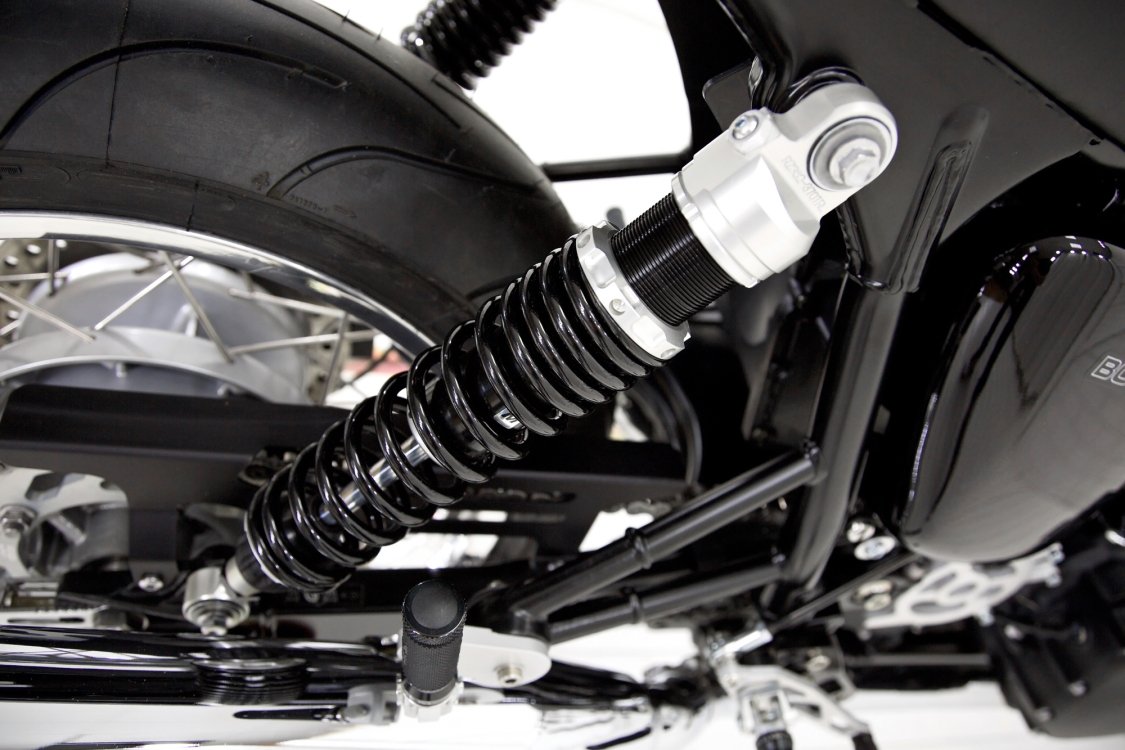
On the selection and installation of suspensions there are separate videos and articles. To start, we added a new fork and shock absorbers. As a result, we saw:
- Better braking, because the fork works reliably in compression and rebound, does not swing, and keeps the wheel on the road in any braking mode.
- Better stability when leaned over in corners for the same reason. The new suspensions allow greater acceleration and deceleration, without unloading the wheels as on a standard motorcycle.
- The ability to adjust, including when operating with a passenger.
- Faster response to countersteering and, accordingly, better maneuvering due to reduced fork offset.
Optics

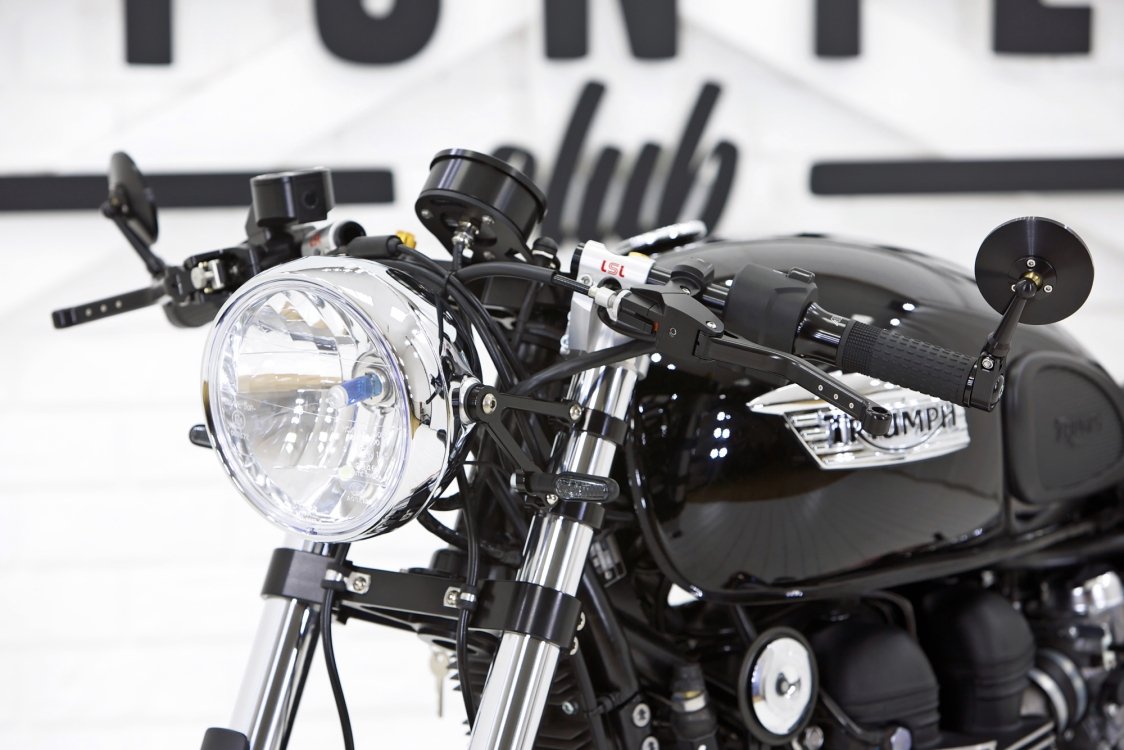
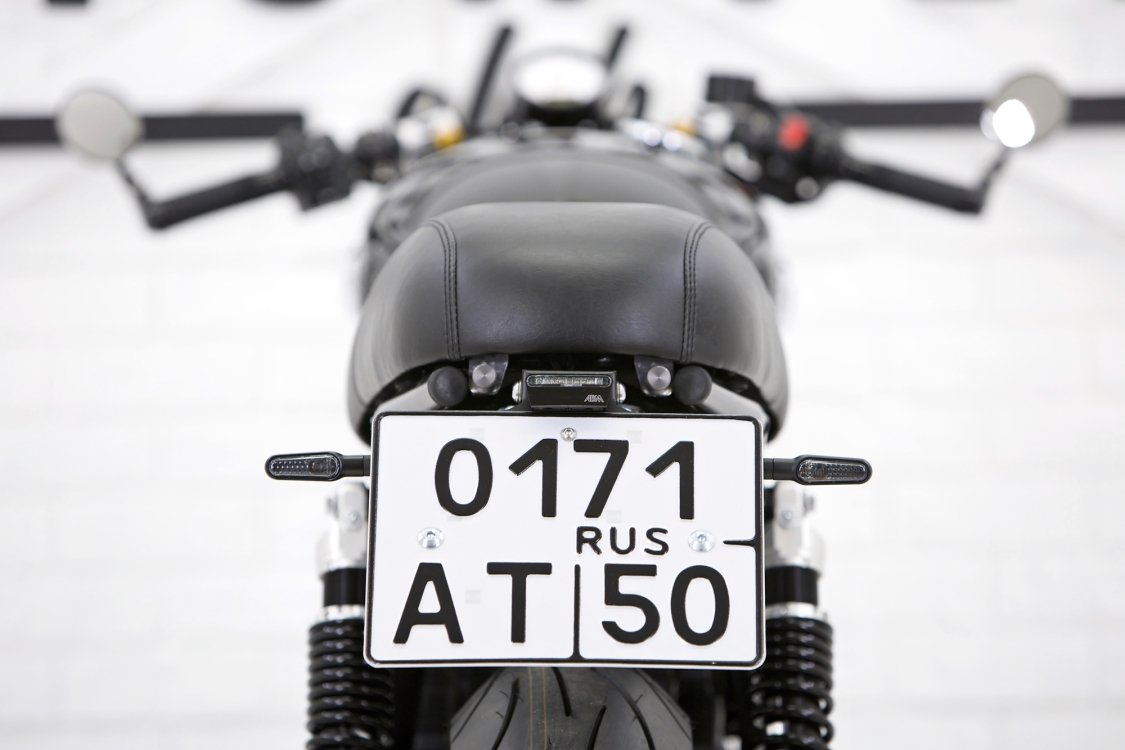
We built all the lighting from scratch. The new components are lighter due to the materials and compact form. The LED turn signals and brake light are more reliable and brighter.
Wheels
The front wheel had to be made from scratch in order to install the brake system with two discs on a light aluminum rim under a wide sports tire. The rear is assembled on a standard hub and also has an aluminum rim under wide tires. The standard steel sprocket was replaced by our own aluminum sprocket, which is a half kilo lighter than the original one.
- Wide tires allow you to tilt the bike more confidently and more deeply in corners due to a larger contact patch. This also allows for better braking for the same reason.
- The 17-inch front wheel allows for quick maneuverability and less effort during counter steering. Stability of a motorcycle on a straight with such a wheel becomes worse, but for a sporty city bike this is acceptable.
- The front wheel turned out to be lighter by 1.3 kg, the rear wheel — by 2.2 kg. Reducing weight not only reduces unsprung mass, but also reduces the transmission loss on the rear wheel!
Brakes

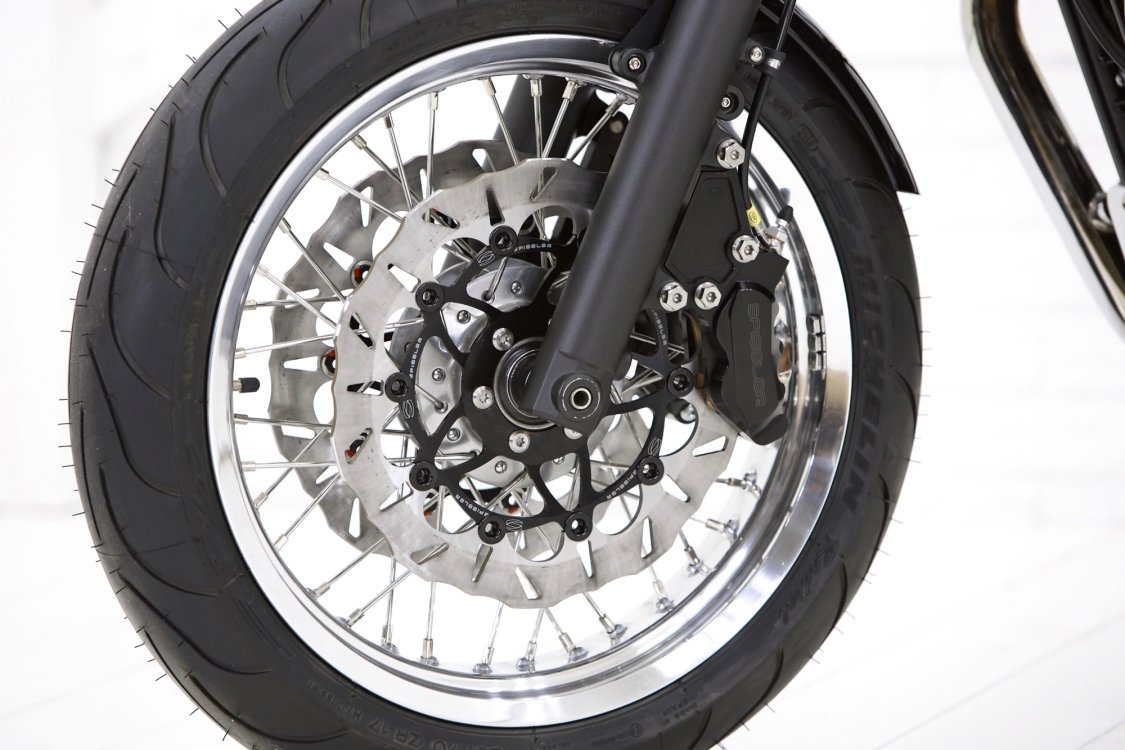
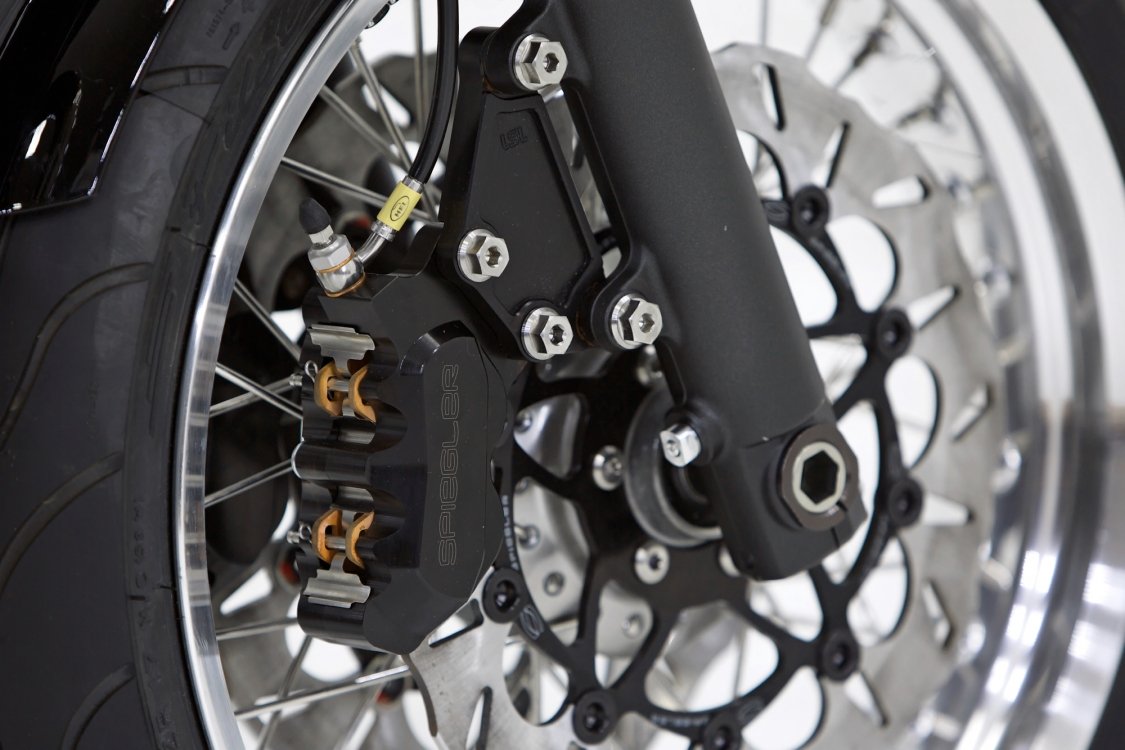
We built the front brakes from scratch on German Spiegler master cylinders, two ABM floating brake rotors and HEL braided brake lines. In comparison with the standard front brakes, the new system is completely different and is designed for prolonged, intense braking of the motorcycle. All components are of the highest quality and perfectly fit in style. The implementation of such a system is possible due to the wide front wheel (more contact patch) and reduced fork offset (better loading the wheel when braking).
Exhaust system
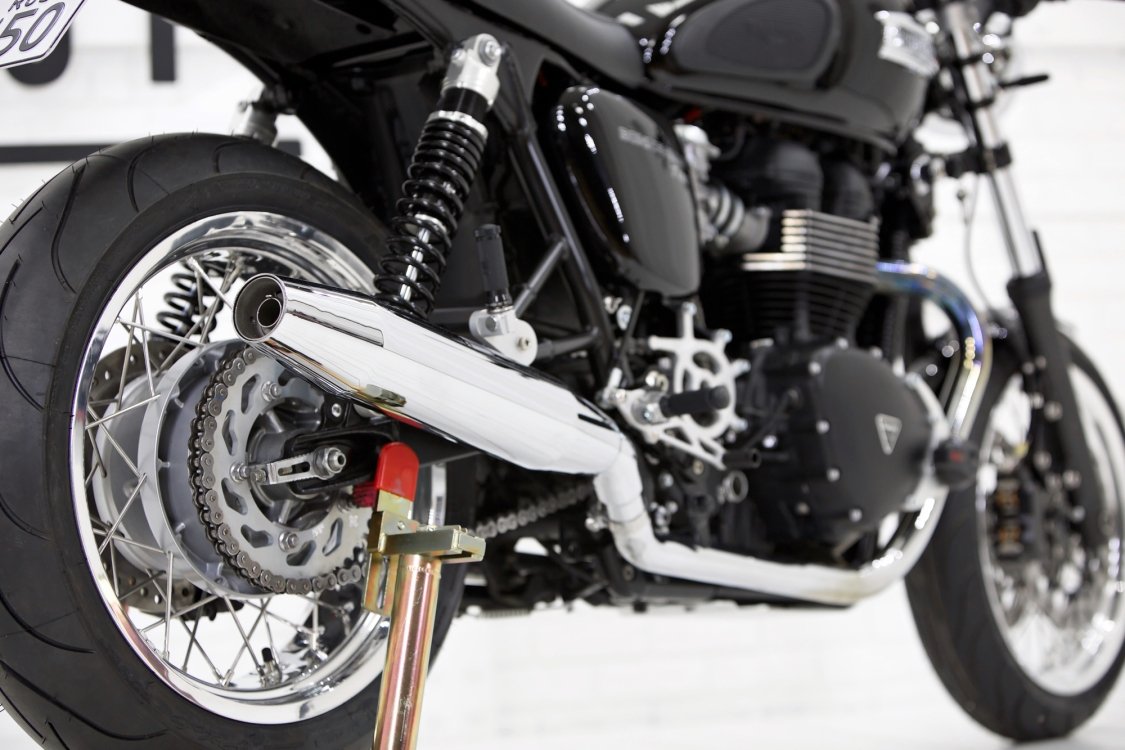

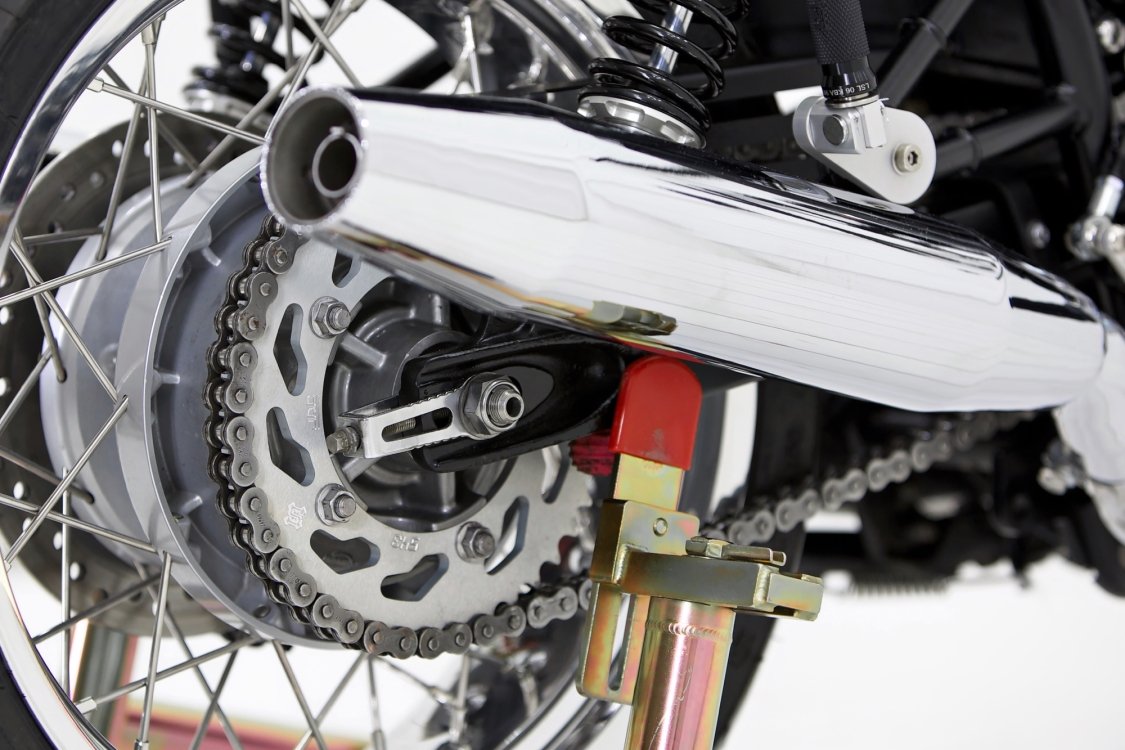
We replaced the mufflers with lighter stainless steel REMUS units, which is very practical, since chrome eventually chips.
Controls
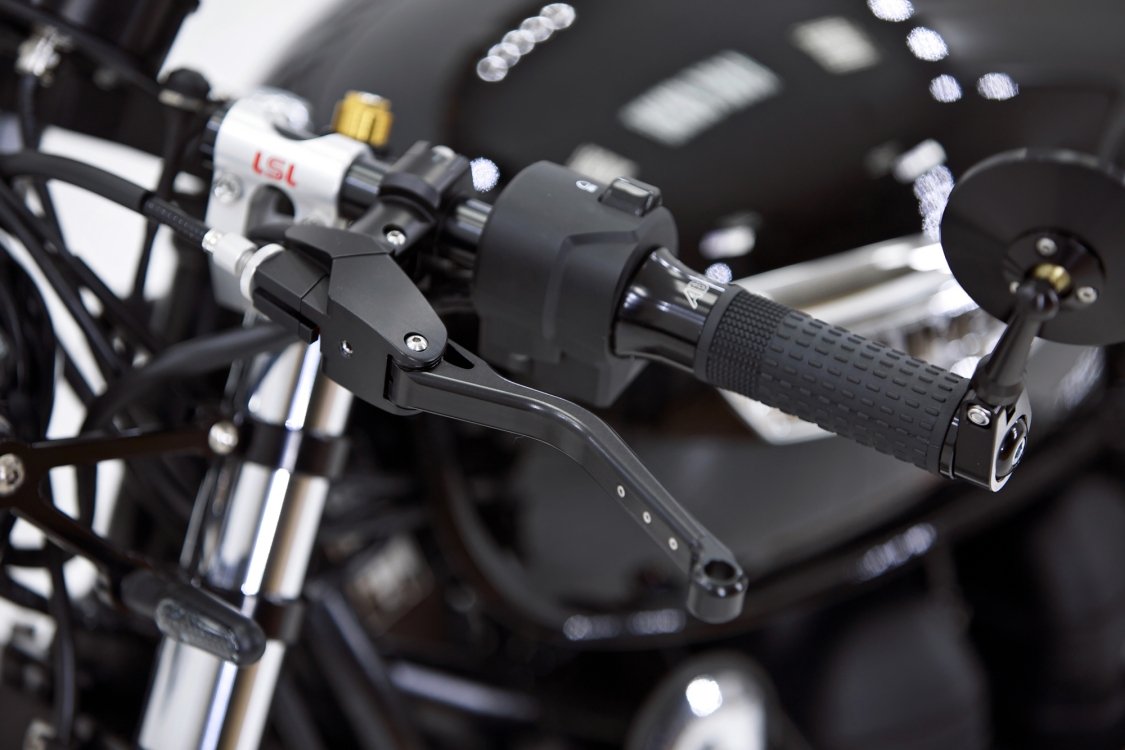
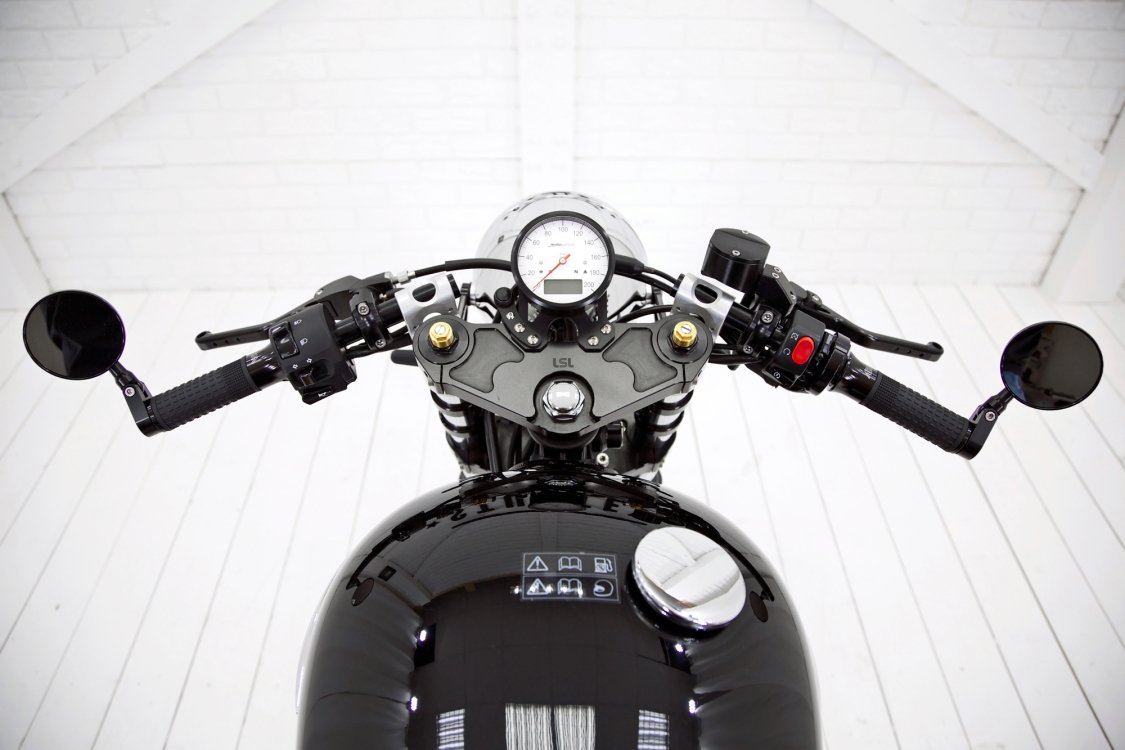
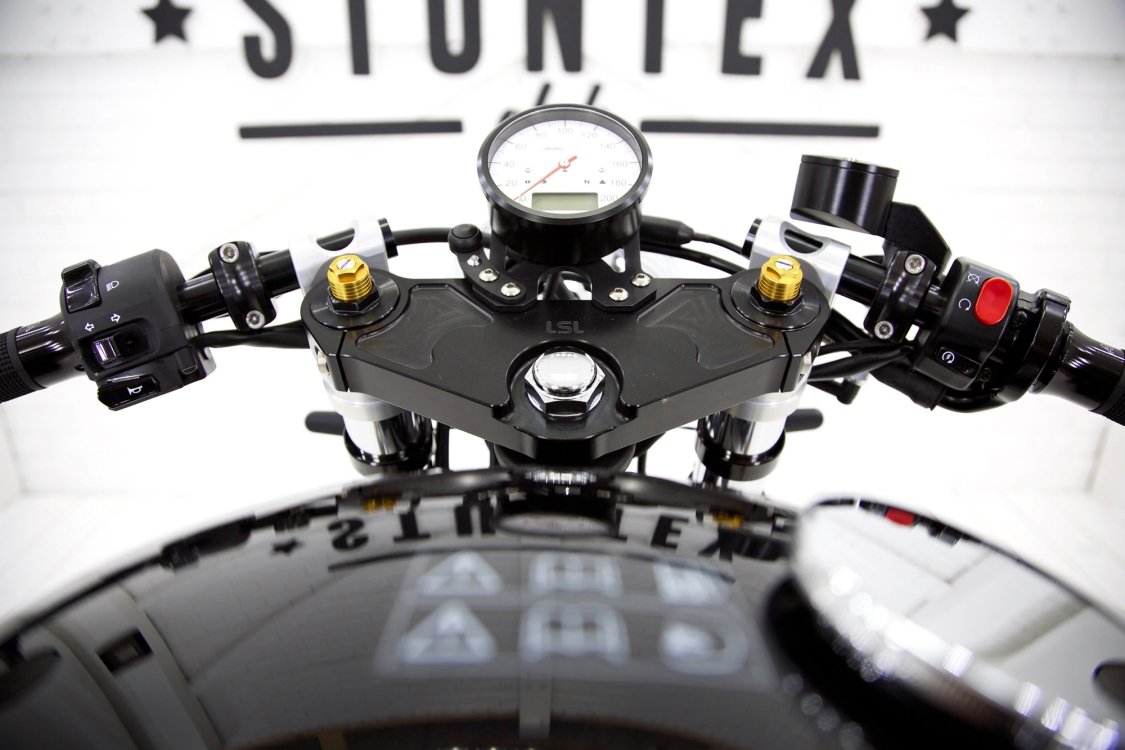
The sporty nature of the bike requires an appropriate riding position. We shifted the driver and passenger pegs back, and the handlebar was replaced with high clip-ons.
- New items and devices are much lighter and more compact than standard ones.
- Rearsets and clip-ons are demountable, brake and clutch levers have a folding mechanism and interchangeable ends — which makes it easier and cheaper to repair a motorcycle after a crash.
The handlebar is lightweight and of high quality: all components are perfectly matched in style and compatibility. Looking at the handlebar creates the feeling that everything is factory, but it is not.
Seat
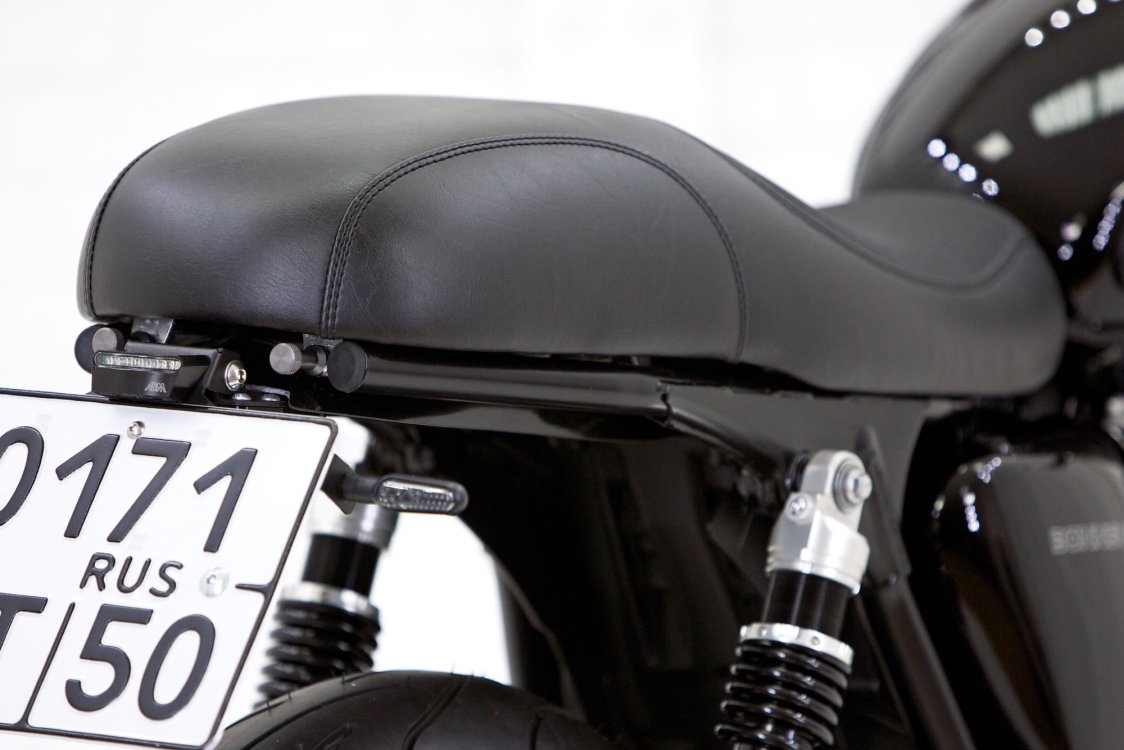
The classic Cafe racer seat had to be abandoned, because we wanted to ride with a passenger. We chose the comfortable, lightweight LSL Clubman seat.
Protection
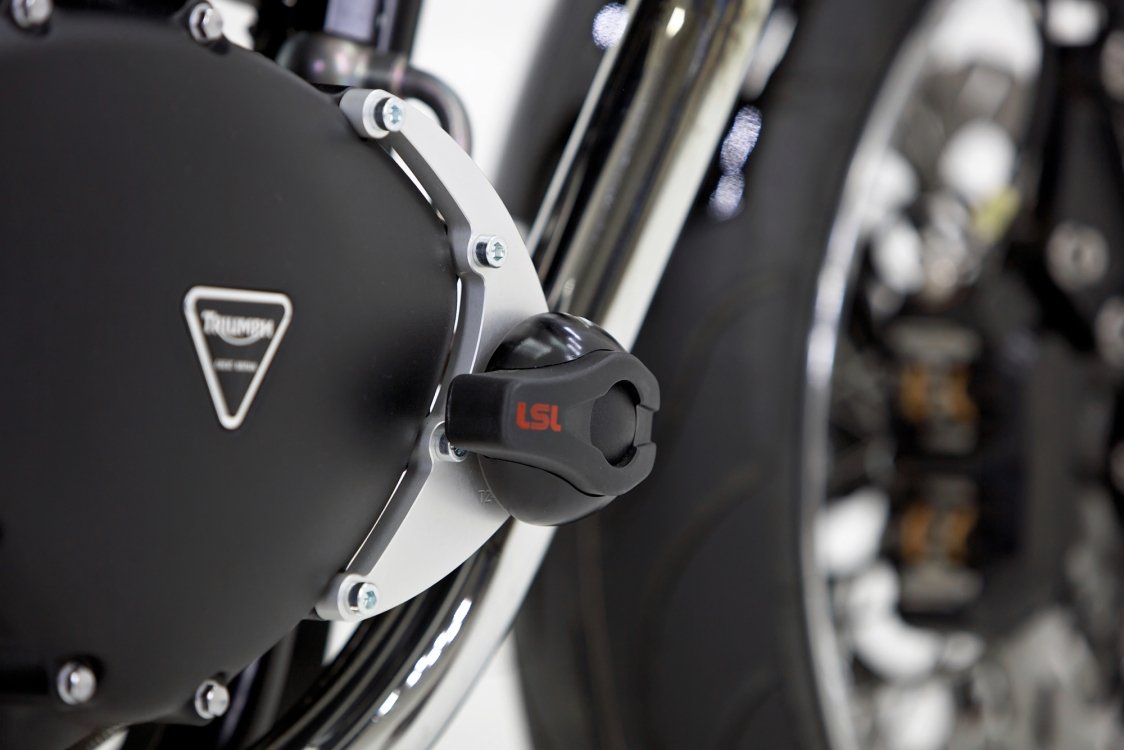
Any protection on a Cafe racer is an extra and not necessary detail from the design point of view. We added LSL crash pads, because we have plans to practice on the track and practice lot. An aluminum sheet was installed to protect the crankcase, because the front fender is shorter than the original, and we needed to protect the frame and engine cover from chipping. Russian roads are still of different quality, there are areas with small stones.
Not done
We did not install a complete exhaust system, because this requires the installation of a fuel controller. According to the power graphs, this adds 2.5 HP — a little, and fitting all the control units is not an easy task. You can increase power by reducing transmission loss by making the rear wheel and a set of sprockets lighter, which we did.
We did not install zero resistance filters, as is done on many projects, because such a modification disrupts the stock crankcase ventilation. It also needs engine tuning.
Cost
The cost of the project strongly depends on the cost of the donor and the success of the sale of all original parts (the entire steering column assembly with the wheel and hub, shock absorbers, seat, rear fender with optics, footrests, chain cover, tires and rear wheel rim with spokes). Everything that we put on the motorcycle cost about 10,500 EUR.
Maintenance is cheaper than a standard motorcycle, even though we used premium quality items! This is due to the very high prices for genuine parts. For example, in the event of a crash, it is much cheaper to replace individual parts of the LSL, ABM and Spiegler components than to buy a factory part. It would be great to buy from Triumph only a tank, a motor and a frame, and everything else should be built on your own — it turns out better and cheaper!
Conclusion
The project turned out to be top-level. There are a lot of cafe racers based on Bonneville that are more expensive, but we didn’t find any better.
We recommend not bothering with a dual-disc brake system, it is better to assemble the brakes on one brake disc with a 6-piston caliper. It is cheaper and easier, because it does not require the assembly of the front wheel from scratch and some unique parts for fitting calipers with discs.
We filmed virtually the entire build and wrote detailed articles on each change. We hope it will be useful to anyone who wants to go the way of construction on their own. All the main points were explained, and for details and subtleties you can consult us.